OP-ED: NEW CALIFORNIA EV INCENTIVES

After the Federal government revoked the EV tax credit and other incentives, the Golden State promised it would fill the gap, then revoked the promised. Now it says there’s a new plan in the works. Is this for real, or is it California Dreamin'?
By Zoran Segina
Fri, May 1, 2026 05:00 PM PST
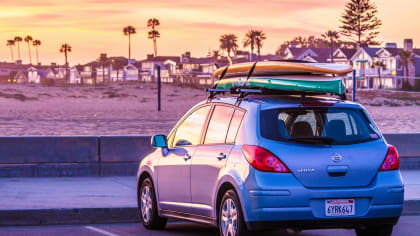
Featured image above: Will the recent price reduction of the Tesla Cybertruck to $64,990 qualify it for the new California EV incentives (Nakano).
Reaching for the Bright Lights
At the World Economic Forum in Davos in January 2026, California Governor Gavin Newsom said the state has surpassed 2.5 million clean car sales and the achievement came after California “invested in this future when others said it was impossible.”

He framed the number against a modest goal to get 1.5 million clean cars on the road, set more than a decade ago.
What Has Been Done
As for electric vehicles, California has 1,256,646 registered units, five times more that the second place Florida, with over 254,878 registrations. Texas has 230,125, Washington 152,101 and New Jersey 134,753.
Among all registered vehicles for the fourth quarter 2023, California has 4.28 percent electric vehicles compared to a national average of 1.12 percent.
This number did not rise organically. Between 2010 and 2023 California government spent $1.49 billion subsidizing 594,000 vehicles in the Clean Vehicle Rebate Program.
Additionally, the buyers benefited from the $7,500 federal tax rebate and in addition to the financial incentives, obtained access to high occupancy vehicle, aka diamond lanes.

Californians Pay The Price
Meanwhile, the remaining 95 percent of the Californians—those travelling in carbohydrate-powered machines—struggled by paying the most expensive fuel in the United States.
California annually spends $25 billion importing 75 percent of its oil, mostly from foreign countries.
Gasoline refined along the US Gulf Coast—primarily in Texas and Louisiana—is first shipped roughly 1,100 to 1,300 nautical miles to Freeport in the Bahamas, where it is stored at large transshipment hubs before being re-exported to California to avoid application of the Jones Act—a 106-year-old law mandating that shipping fuel between domestic ports must be done by the US-registered vessels.
To exacerbate the problem, California's operational refineries have dropped from 23 in 2000 to approximately 11 or 12 as of early 2026 including the Phillips 66 Los Angeles refinery and Valero's in Northern California.
The state experienced a 23 percent capacity decrease between 2019 and 2026.
As LA Car reported, back in 2024 (“LA Auto Show: The Secretary Came to Town”), Governor Newsom promised to provide California residents with electric vehicle (EV) rebates if the federal government eliminated its EV tax credit.

Newsom announced he would propose restarting the state's rebate program if the federal incentive was removed.
Toward the end of September 2025, he backtracked, stating that California "can't make up" for the expiring federal credit and would not replace it.
In light of the fact that the Governor may be holding himself as the principal contender for the President of the United States in 2028, tip-toeing back on promises is not a good look.
The Plan
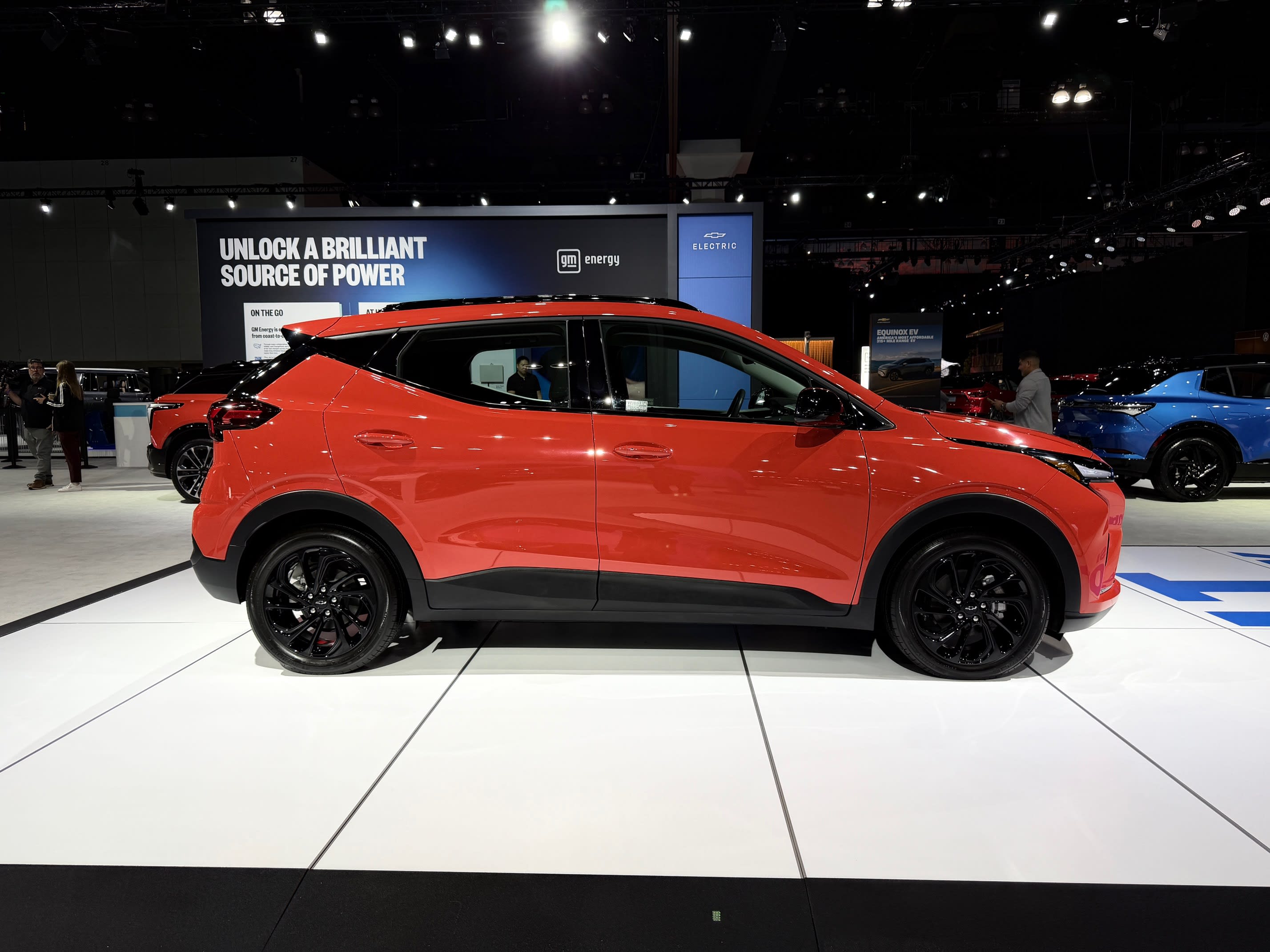
Accordingly, Governor Newsom has proposed a $200 million electric vehicle (EV) rebate program in his 2026 budget to replace recently ended federal tax credits.
The plan focuses on first-time EV buyers, and requires automakers to match state funds to potentially offer rebates between $1,500 and $7,500, with final details and legislative approval expected later in 2026.
Incentives could range from $1,500 to $7,500, with a $3,500 "sweet spot" on new passenger vehicles costing no more than $55,000 ( $80,000 for SUVs/pickups.)
Doing the Math
The $200 million plan has several fundamental problems: it is too little money, it may take time to reach consumers and may inadvertently help wealthier buyers.
The math is brutal—in 2025, the Californians purchased 404, 818 electric vehicles –100,326 in the first quarter, 100,671 in the second, 124,755 in the third, but only 79,066 in the fourth..
The $3,500.00 rebate for 404, 818 new vehicles would require $1,416 billion.
Given California’s projected $18 billion budget deficit for fiscal year 2025-26, according to the Legislative Analyst's Office (LAO) November 2025 report, this EV rebate plan may have sustainability difficulty.
Even before Congress and President Trump blocked its vehicle mandate last year, California was falling short of the requirement that 35 percent of new cars sold in 2026 be zero-emission. In the fourth quarter of 2025, without the incentives, EVs and other clean cars accounted for just fewer than 19% of new car sales— the lowest quarterly share since mid-2022.
It is possible that, in November 2024, Governor Newsom was unaware that California faced a significant budget deficit in 2024, with estimates ranging from roughly $38 billion to as high as $73 billion for the 2024-25 fiscal year?
The state addressed this shortfall through spending cuts, reserves, and revenue adjustments to close the gap. With a projected $18 billion budget deficit for fiscal year 2025-26, and a persistent disconnect between revenue and spending, California structural deficits could potentially rise to $35 billion annually by 2027-28.
Electrical vehicle sales in the United States are experiencing a significant decline in early 2026, with a reported 27 percent drop in Q1 compared to the previous year. The used EV sales have increased, showing a growing market for second-hand electric cars. The plan should focus on the first time EV buyer as opposed to a new vehicle buyer.

Electric vehicles on average cost about $6,500 more than gasoline-powered cars, according to Cox Automotive and have historically been purchased by the buyers in higher income bracket.
Who will ensure that the incentives do not benefit the rich and how such policy will be implemented remains unknown at present.
Then There’s the War
Perversely, the exorbitant gas prices in California caused by the Middle East war may increase sales of electric and other non-carbohydrate powered vehicles.

The vast majority of us, however, wait to hear how California politicians plan to alleviate our financial pain.
Pretty Promises vs. Ugly Fiscal Reality
The most audacious (for a lack of a more pejorative term) part of the plan is the requirement that the manufacturers subsidy EV sales by providing matching funds.
The plan seems oblivious to the fact that most car makers lose money on electric vehicles and cannot wait to shut down unprofitable production lines.
Legacy automakers have faced over $50 billion in write-downs and losses on EV initiatives as of early 2026. Some industry estimates indicate OEMs (original equipment manufacturers) lose around $6,000 to over $20,000 on each EV sold.
Margaret Thatcher famously stated, "The problem with socialism is that you eventually run out of other people's money."
In these volatile political times, California politicians should make sure that the plan, when implemented, does not fall within Prime Minister’s description.
About The Author

Zoran Segina grew up in Eastern Europe, where he owned several Zastava 750s (a variation of the Fiat 600) and participated in local rallies. After a lengthy diet of Yugoslav-manufactured cars, he came to the Mecca of automotive culture – wherein he promptly lost his heart to a tall girl and a short Dart Swinger. He currently commutes around Los Angeles in a twelve year old MB station wagon, having made a switch from a Volvo 240 DL with a quarter million miles on the odometer.