LBGP WEEK: INDYCARS DAZZLE THE SENSES
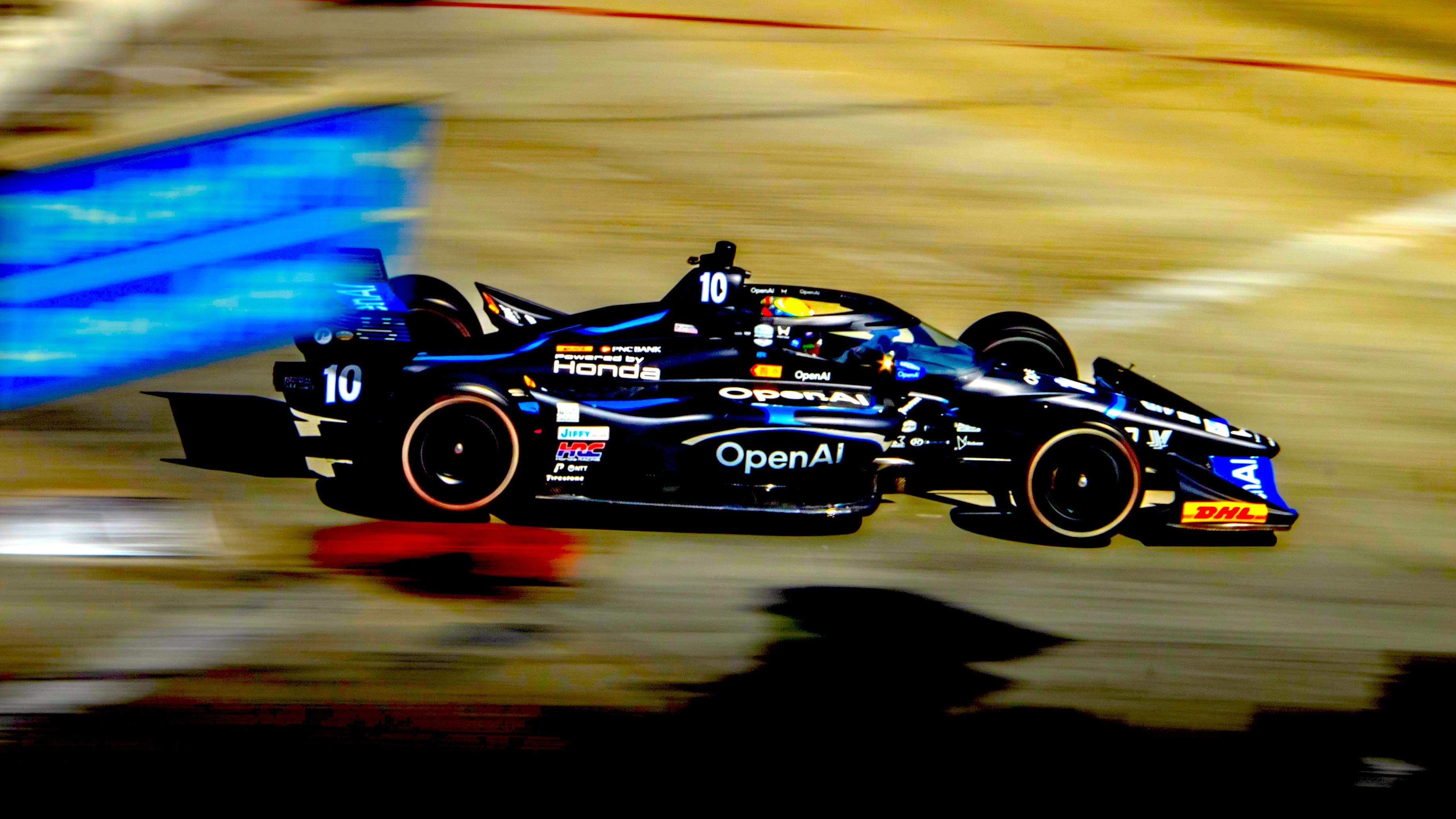
The dazzle of IndyCar sparkles in the Long Beach sunshine around this time on the calendar each year.
By Brian Kennedy
Thu, Apr 30, 2026 05:00 PM PST
Featured image above: Alex Palou in the No. 10 Chip Ganassi Racng Honda (Alvin Ahn photograph).
See Me, Feel Me
Long Beach, CA—The dazzle of IndyCar sparkles in the long Beach sunshine around this time of the calendar year.
Look for yourself at an IndyCar up close, and you’ll notice the colorful presentation of livery and sponsor names. You’ll be amazed at the tightness of the cockpit, and you’ll be surprised at the size of the tires.
Listen to it when it starts up, and your ears will be assaulted in the very best way.

See the car as it careens around corners, inches from Long Beach’s concrete walls, and you’ll wonder at the amount of skill it must take to make these things touch 180-mph, which they do on the straightaways, and then to reign them in when the corners come.
All of this is the passion that the Acura Grand Prix of Long Beach offers.
Now You See It...
The thing is, as a 1.968-mile street course offering 11 turns, it doesn’t offer views of the race. Only glimpses, because as soon as your favorite car appears in your field of vision, it disappears again.

The only way to keep in touch with the progress of the race is to use a scanner, satellite radio, or screen, if you happen to sit in sight of one.
The question is, do you come to the race to have a full narrative embedded in your memory, or do you come to the race more just to be there?
The story of the race is difficult to piece together in person. And this year, the Sunday event didn’t present all that conflicted a narrative, anyway.
Qualifying was where the story was intriguing.
The Fast Six
During those sessions, which gradually whittle down a field of 25 entrants to a group of “Fast Six” who run for the pole, there was car after car meeting a date with the wall.
Mick Schumacher’s was perhaps the worst hit as he plowed directly into the barrier.
Don’t tell that to Scott McLaughlin, Nolan Siegal, or Roman Grosjean, who also met new concrete friends during the preliminary sessions.
Thing is, no one was perfect. Alex Palou, the eventual race winner, made a mistake on the last corner in qualifying and perhaps cost himself the pole.
Who was on pole, then? Felix Rosenqvist, driving for Meyer Shank Racing, took it, his seventh in a career that spans nearly 120 races and eight seasons.

The Three Super Teams
The so-called “Big Three” teams, Ganassi, Andretti Global, and Penske, who typically dominate, were represented by only positions in the three through six spots, rather than being amongst the top few. They, by the way, have 147, 78, and 247 wins, respectively.
Here’s the rest of the six fast starters: Pato O’Ward sat second behind Rosenqvist in his Arrow McLaren entry. Then it was Palou, Kyle Kirkwood, David Malukas, and Scott Dixon. The first two drivers, in an interesting sub-point, are apparently best friends.

Palou would be found at the top of the speed charts during Sunday morning warmup, it should be noted. Meanwhile, Josef Newgarden found himself in the runoff area.
The Davids Among the Goliaths
The race recap goes something like this: Two smaller teams, Meyer Shank Racing and Arrow McLaren, start on the front row. The three super teams, Ganassi Racing, Team Penske, and Andretti Global, start here, there, and everywhere. The ending is similarly disordered.

Say that another way, and it sounds like this: Despite the presence of the three super teams, a lot of smaller outfits can score decent finishes and even poles and wins (though not the victory on this day, as it turned out) in the IndyCar series. Witness a strong tenth for Graham Rahal, fifth for O’Ward, and ninth for Alexander Rossi with Ed Carpenter Racing.
A Quiet Roar
During the 90 competition laps, despite the visceral thrill of what they used to call the “Roar by the Shore,” there wasn’t a lot happening for most of the race. Rosenqvist led the first lap and stayed out front for 51. Palou took over and brought it all the way home to 90, a total of 32 at the head of the line. In between, Power led a couple on pit stops, and Newgarden led five.
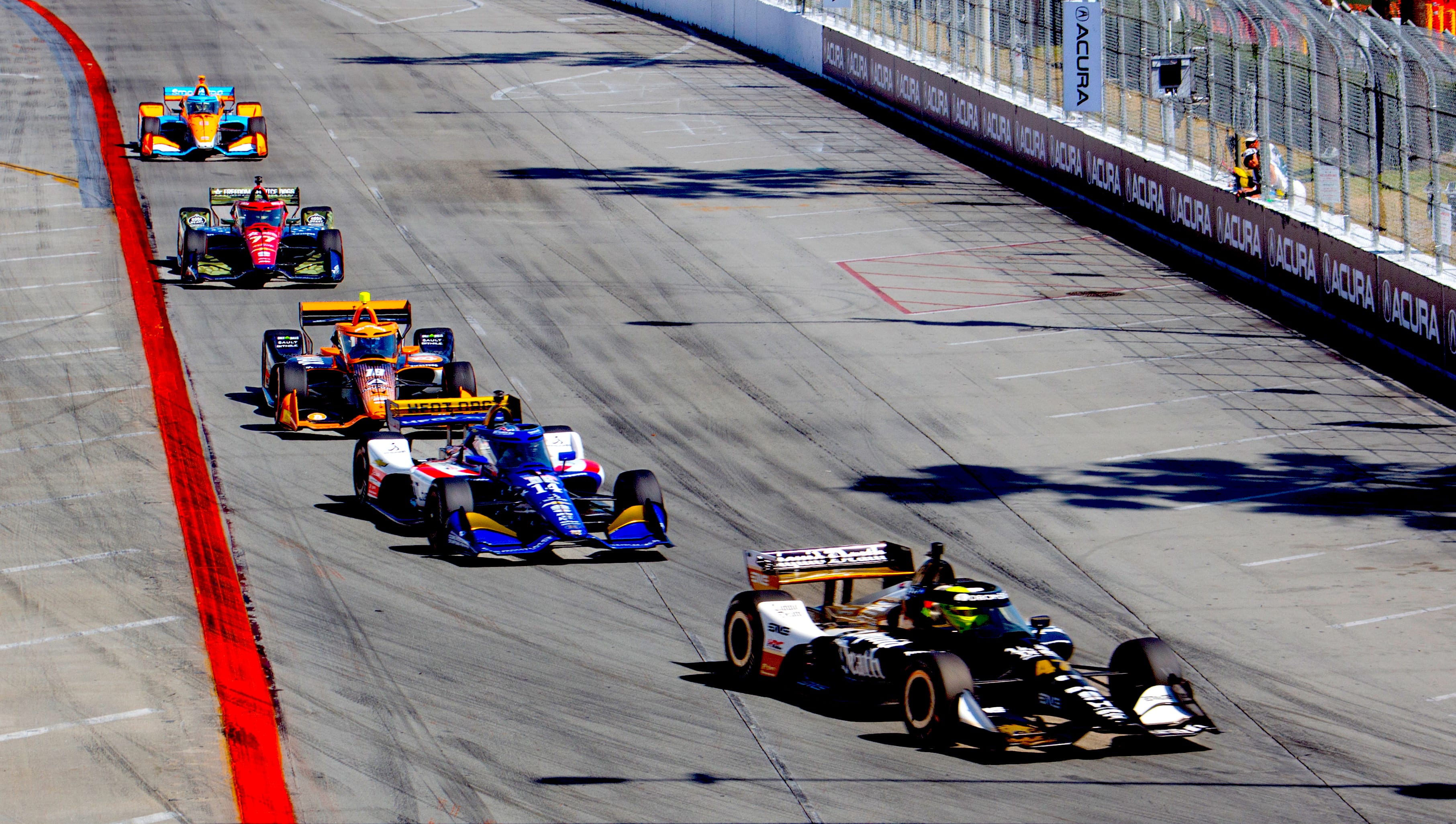
Most cars made two stops, with one thing they could control being the tire compound, soft or hard, and whether to put on new rubber or tires that had been run-in during practice of qualifying.
Déjà Vu
For Palau, it was the second year in a row out front at the end. It also marked the chance for him to regain the series points lead, which he had let go of for a brief span of days.
After the race, he was his typical self: joyful but demure. He knows he’s the best, and he also realizes that sounding aloof or like he expected to win would at some point get tiring for fans.
I’ll let the talking belong to one of his race engineers, who is a friend of mine.
“He’s amazing. We tell him, ‘You’ve got to make the tires last ten more laps,’ and he does it. We tell him, ‘You’ve got to stretch the fuel,’ and it’s like ‘OK,’ and he does it.”
The 2025 Indy 500 winner now looks to do it again in Indianapolis next month, with the 500 coming after the Indy road course race early in May. If he pulls it off, expect the same big smile, and the same, “It was my guys,” type attitude. And know that it’s genuine. He really is the nice guy that you see on TV.

Or, the guy that you could have seen for yourself, in brief flashes of color as he sped past your vantage point while you set in the Long Beach sunshine.
About The Author

Brian Kennedy always wanted a ’66 Mustang. 10 years ago, he bought one – and he’s been restoring it ever since. Brian extended his passion for cars by covering events for magazines like Grassroots Motorsports, Sportscar, and Victory Lane – e.g., events in Cart, Pro Rally, Formula Atlantic, the SCCA Runoffs, Trans Am, SVRA, VSCDA, and VARA. He’s also profiled a number of cars and interviewed a number of personalities – among them: Gene Felton (IMSA), Hurley Haywood, Jerry Seinfeld, and Nigel Olsson.