SECRETS OF THE BIG SHOW IN THE BIG APPLE
How is it that the most well-attended auto show in North America is in a city where most people don’t own cars, and those that do avoid driving them? We go to the New York International Auto Show to find the answers.
By Roy Nakano
Fri, Apr 3, 2026 03:00 PM PST
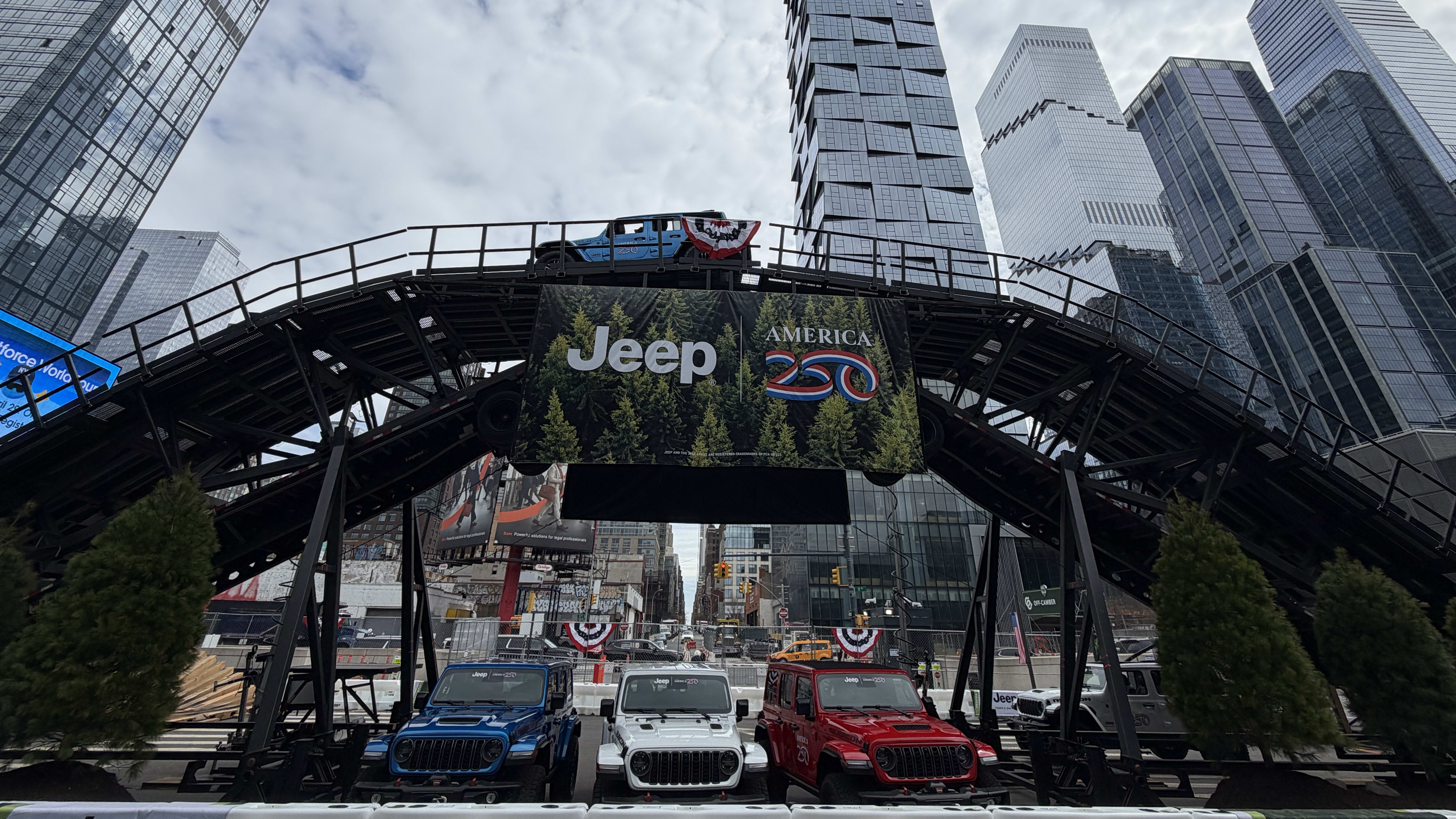
Featured image above: The Jeep ride at various auto shows is a highlight among the public attendees, but Jeep takes it to another level at the New York International Auto Show. The ride just seems to go a little steeper and the skyscrapers seem to be that much closer (all images by the author unless otherwise noted).
The contradiction is not lost here.
In the Big Apple, only 45 percent of households own cars. In the Manhattan borough, it’s even less at 22 percent (Final Infographics). And those that do will avoid driving if at all possible.
In contrast, Los Angeles (“the Big Orange”) is car culture ground zero.
A University of Southern California study estimates that over 90 percent of Los Angeles County households have access to a car. People find excuses for driving their cars in LA. There’s a car show every Saturday and Sunday—not to mention at various intervals during the weekdays.
Southern California’s In-and-Out Burger is credited with introducing the first two-way speaker system for ordering food through a drive-through restaurant.

The first drive-through Starbucks was opened in Hermosa Beach, California.
In the United States, the “Blessing of the Cars” first became a major custom car show event in Glendale, California.
ArtCenter College of Design in Pasadena, California is widely regarded as the top automotive design school in North America.
Even the car companies recognize the importance of Southern California as a center for creativity. Every major car company that sells cars in this country has established a design studio in Southern California.
So, with all this going on in Greater Los Angeles, why is the most well-attended auto show in North America in New York, where most people don’t own cars and try to avoid driving them if at all possible?
Just to be clear, we're referring to the number of people that attend the show. The Chicago Auto Show reportedly has the biggest square footage. But when it comes to members of the public that attend, New York City is No. 1.
Is it due to New York’s proximity to Europe? For the European automotive journalists, traveling to New York is certainly far easier than a trip to Los Angeles.
It turns out the displays of European cars at the NYIAS were no larger than the recent ones at the Los Angeles Auto Show. Unlike the massive displays of years past (see LA Car's The Golden Era of Auto Shows), many of the European brand exhibits looked like they received heavy doeses of support from local dealers.
Here's what Mark Schienberg, President of the New York Auto Show, says about what makes the New York Auto Show special:
"The New York International Auto Show continues to be the best place to experience and learn about new products the auto industry offers,” said Mark Schienberg, President of the New York Auto Show.
“Each year, the Show provides the largest display of cars and trucks in one location to millions of car buyers in a unique environment. No other venue offers this kind of comprehensive and engaging forum, where new technology and designs can be viewed, explored, and enjoyed.”

Meanwhile, after staying a few days in New York City, we think we've hit upon the predominant reason for the New York show’s attendance success.
It's the same reason that holds the LA show down:
It’s All About Getting to the Show
The public transportation system makes access to the New York show’s Javits Center as easy and inexpensive as getting to any other place in Manhattan. And New Yorkers are thoroughly accustomed to its excellent subway and bus systems.

In contrast, LA’s public transportation system is a ways off from New York’s standard, and regardless, Angelenos are still not used to using it. “Los Angeles drivers know less about riding public transportation than they know about driving in the rain,” said one journalist transplant from the east coast commenting about how terrible Angelenos are at driving in the rain.
The Angeleno aversion against taking public transportation means most people attending the LA Auto Show end up paying as much as $42 for parking in the show’s Los Angeles Convention Center.

It’s a huge deterrent against attending the show at all. Consequently, most potential show-goers just don't go.
At the Javits Center, the cost of parking is equally high, but New Yorker already know how to get there without a car.
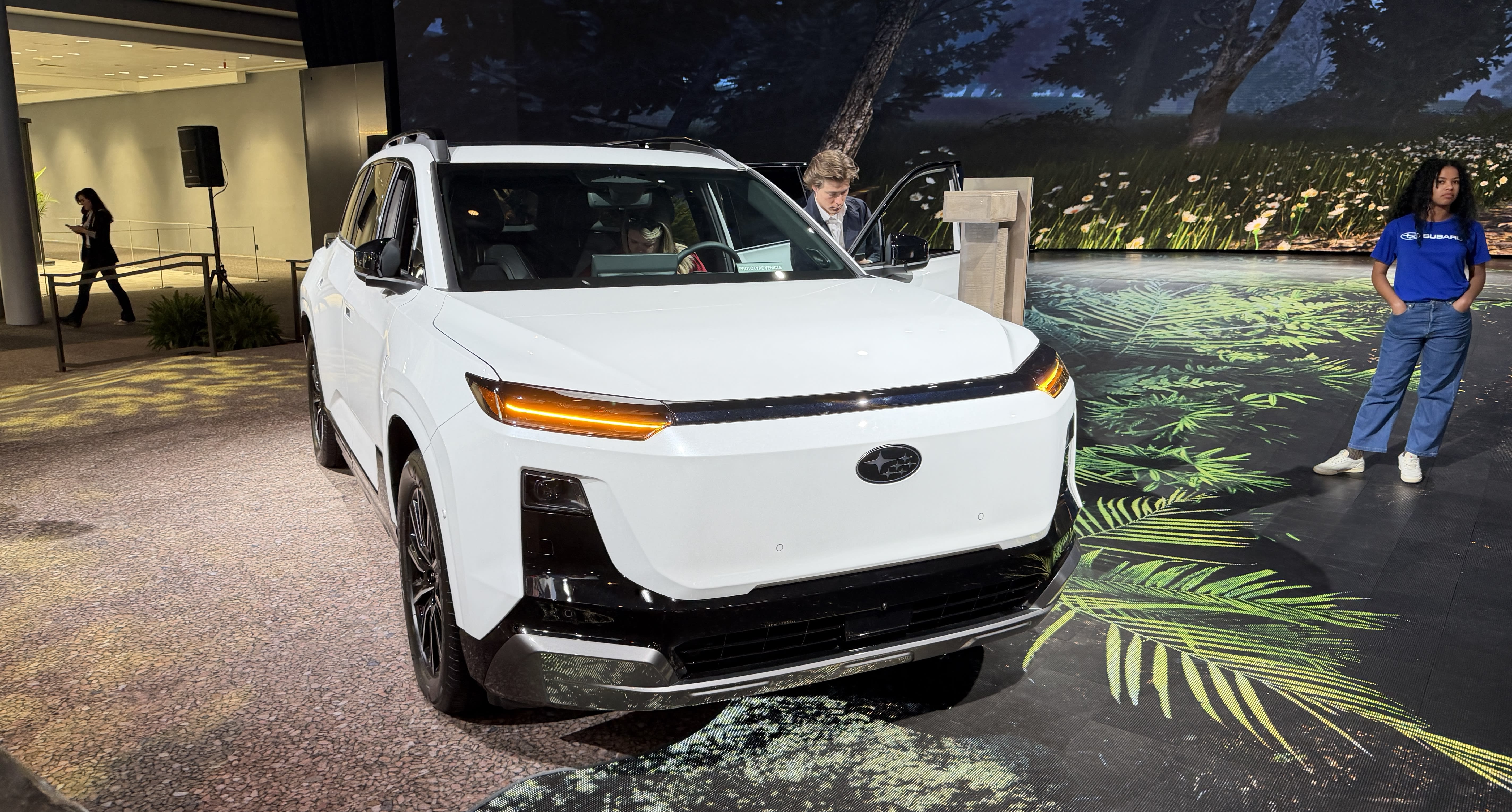
2025 was a banner year for new-car introductions by Subaru, with the Uncharted, the Trailseeker, and new versions of the Outback and Soltera. Evidently, they’re not done yet, as the 2026 NYIAS is the venue for introducing a three-row all electric SUV, the Getaway. The vehicle is another joint venture with Toyota, this time its Subaru’s counterpart to the Highlander. Subaru also used the NYIAS to introduce a Wilderness version of the new Forester Hybrid, which means hybrid technology will now be available on the most offroad version of the Forester. Don’t be surprised to see the new Outback with a hybrid shortly.
BTW, there ARE car people around NYC. Ask Bruce Springsteen.
Truth be told, while those in the Manhattan borough are mostly car-free, the surrounding areas are full of car culture.

Bruce Springsteen sang about it on his album Born to Run, when "Magic Rat drove his sleek machine over the Jersey state line" and "the visionaries in the parking lots dressed in the latest rage."
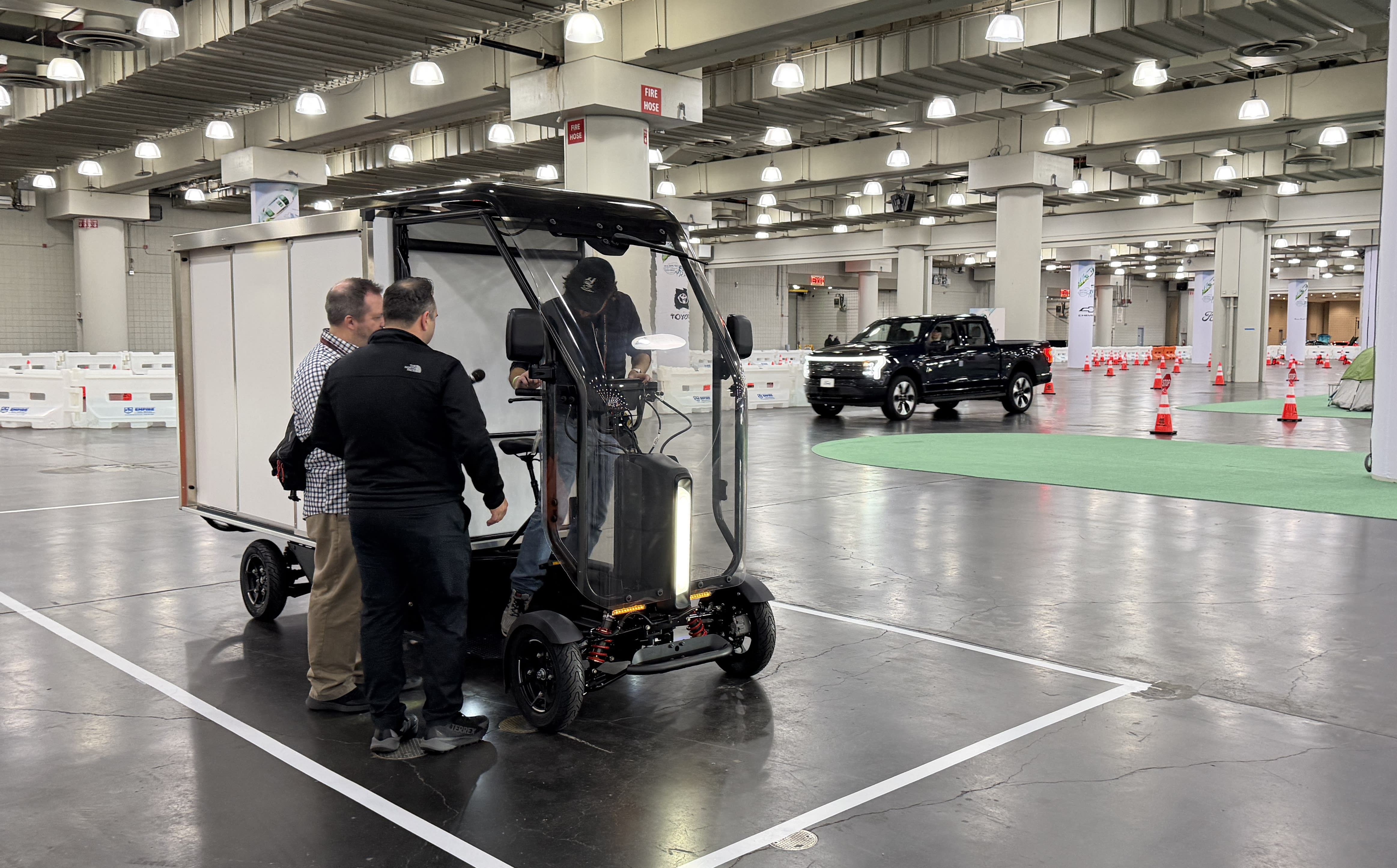
At the New York International Auto Show, some of the most interesting machinery was in the Javits Center’s Level 1, with cars presented by R2XPO, which also had actor Sung Kang on hand to talk about his new movie Drifter, the Long Island Street Road Association, NYC’s Infamouz lowrider car club, cars presented by KarParts 360 and Two 12 Media (Luis Da Silva), and a number of local law enforcement entities.

Level 1 featured JDM vehicles, lowriders, drifters, custom cars, hot rodders, offroad and adventure vehicles, EVs, and a separate track for electric vehicle ride and drives.
It’s Up To You, LA
So, here’s some ideas for making a trip to the LA Auto Show as easy as it is for New Yorkers to go to the NYIAS at the Javits Center—and ultimately for turning the LA Auto Show into the most well-attended car show in North America:

1. Get LA County’s Metropolitan Transportation Authority to make public transportation free for attending the LA Auto Show.
LA Metro (MTA) frequently offers free access to its buses, trains, and bike shares, usually for special events, holidays, or system expansions. Recent free ride periods included Feb. 4, 2025 (Transit Equity Day), June 6–9, 2025 (LAX airport station opening), and Sep. 19-21, 2025 (A-Line extension). Metro often removes fare barriers for major service launches.
2. Offer a substantial admission discounts and extend show access for public transportation users.
The LA Auto Show has frequently offered discounted tickets and targeted free access, such as 2025's free Opening Day for the Deaf/signing community. Discounts are available annually via partners like Costco, FunEx, and special Father’s Day promotions. In other words, this seems like a doable proposition.
3. Offer software that can be downloaded to smart phones from the LA Auto Show site that make it incredibly easy to find out how to take public transportation to the show from your home.
The Acura Grand Prix of Long Beach has an app available on the Apple App Store for iPhone, offering a track map, schedule, and event information to help attendees. For parking specifically, users often use the Passport Parking app for metered spots or pre-book at LAZ Parking or Parking.com. The LA Auto Show should offer the same. Better yet, the LA Auto Show, in coordination with LA Metro (MTA) should offer an app to make it easy as pie to take public transportation to the show.

4. If this works and far fewer people park at the LA Convention Center to attend the show, they can re-purpose its massive and inherently dark parking lots for Larry Chen’s highly successful Night Lights as part of the LA Auto Show.
The LA Auto Show has done a decent job of keeping up with latest automotive trends through its offerings in Kentia Hall and the Concourse Hall and Foyer, located between the South and West Halls at the Los Angeles Convention Center. The one trend it hasn't yet picked up on are the highly popular night light events such as Pennzoil’s Type S Night Lights with Larry Chen patterned after the Option Street Night Festival in Yokohama.
Wouldn't it be great if the LA Auto Show reached the point where large numbers of attendees go to the show via public means (making its parking lots far less necessary)? If that ever happens, the LA Auto Show already has the perfect place for bringing new entertainment to the show.
"They need not have to wait until then to hold Night Lights," says one fan. "They should just use the LA Convention Center parking structure on the weekend before the LA Auto Show for the Night Lights to drum up interest in the LA Auto Show."

“Our LA Auto Show”
With the quite visible participation of organizations like the Long Island Street Rod Association, NYC’s Infamouz lowrider car club, and New York’s various law enforcement agencies in Level 1 of the Javits Center, there is a sense that the local car culture is part of the NYIAS. Surely, this must be a contributing factor to the NYIAS attendance.
LA’s car culture is so vast, there’s no way to fit everyone all in one year, but perhaps the LA Auto Show organizers can invite organizations to occupy some space in the LA Convention Center on a rotating basis?
In addition to the aforementioned Type S Night Lights with Larry Chen entity, maybe some space for past and present standouts from the Japanese Classic Car Show, Monrovia’s Street Rods Forever and the Southwest Unique Little Car Show?
From the lowrider community, there’s Imperials Car Club, the Odd Squad Car Club, and the UltimatE Riders Car Club.
And there’s the page straight out of the LA Auto Show’s site, "Top Los Angeles Car Clubs", wherein the show organizers list everyone from the Alfa Romeo Owners of Southern California to the Vintage Japanese Motor Union.

Bring it to the Finish Line
The New York International Auto Show has the edge in the number of new car reveals and the number of people that attend. The Javits Center is more spectacular than the LA Convention Center, and its surrounding skyscrapers impress.
But LA is not far behind. If it’s culture of using public transportation continues to seek the heights of its car culture, and if the car culture can take more ownership of the show, it be ready for the final coat of wax and to tear up the asphalt.
About the New York International Auto Show
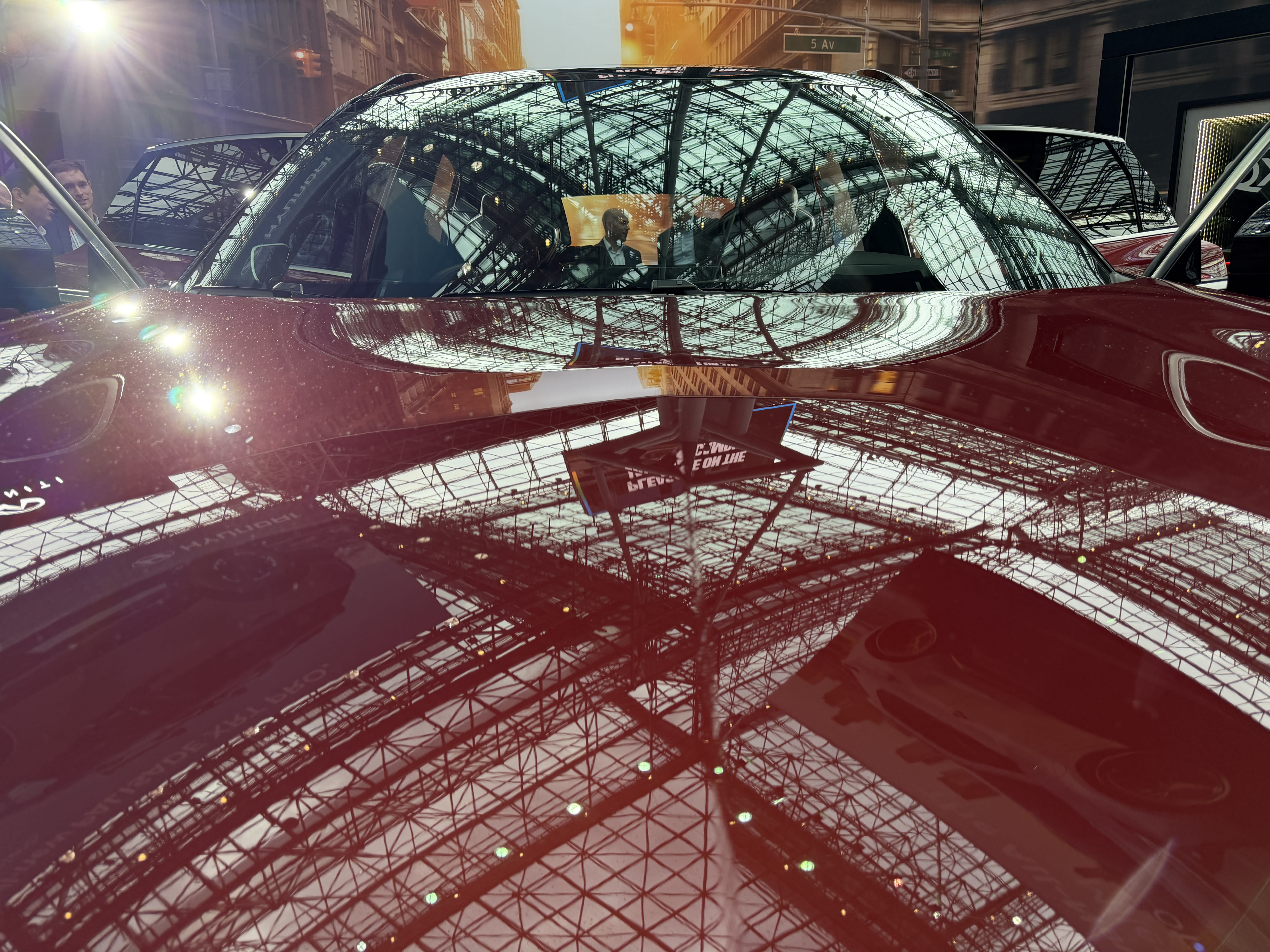
Since 1900, New York has been the staging location of North America’s oldest and largest-attended auto show. “The New York International Auto Show continues to be the best place to experience and learn about new products the auto industry offers,” said Mark Schienberg, President of the New York Auto Show. “Each year, the Show provides the largest display of cars and trucks in one location to millions of car buyers in a unique environment. No other venue offers this kind of comprehensive and engaging forum, where new technology and designs can be viewed, explored, and enjoyed.”
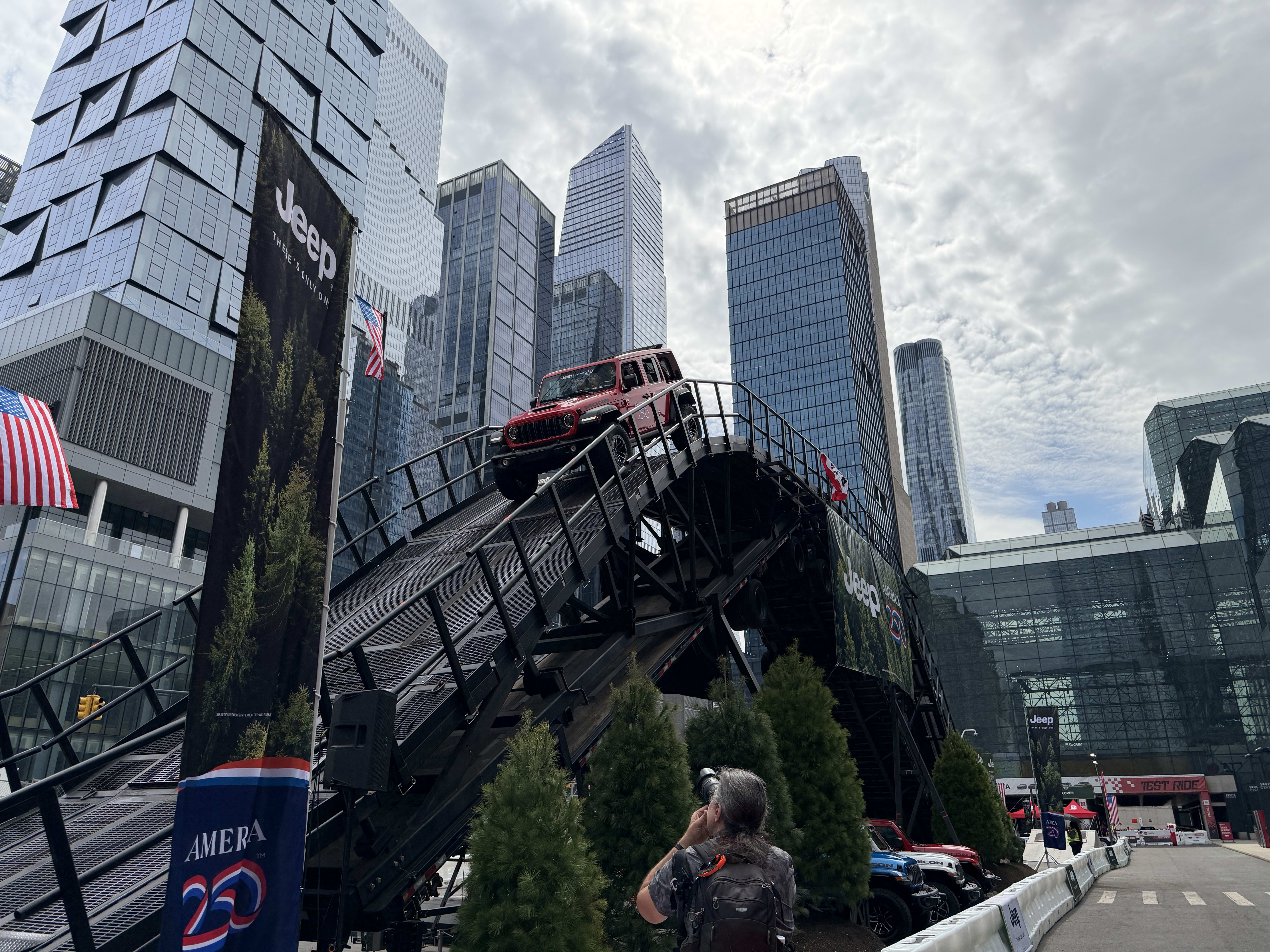
The public days for the NYIAS is April 3-12, 2026, and is held at the Javits Convention Center.
For more information, go to nyias.com.
About The Author

Roy Nakano gave birth to LACar in the late '90s. As LACar's Editor, Roy shapes the content and assigns the stories. As a writer, Roy likes to stray off the beaten automotive path: "Six Degrees of Reparations" reflected on the ethical limits taken by car companies throughout history. "Traveling Through the Past and Present of the Green Book" looked at businesses that took a stand and the man that wrote the book. "Best Cars to Drive in Rush Hour Traffic" was an LACar guide published in the pre-GPS era. "In Search of the First Datsun 510 Tuner" looked at one of the milestones in the origin of import tuners. And "Us vs Them" examines the instances when rivalry among automotive enthusiasts crossed the line to violence and even death.