SLEEPER IN CIVIC CLOTHING
A Deep Dive into the 2026 Honda Civic Hatchback Sport Touring Hybrid
We gather the best videos and stories out there to accompany our own review of this 50-mpg virtual pocket rocket.
By Roy Nakano
Mon, Mar 2, 2026 02:00 PM PST
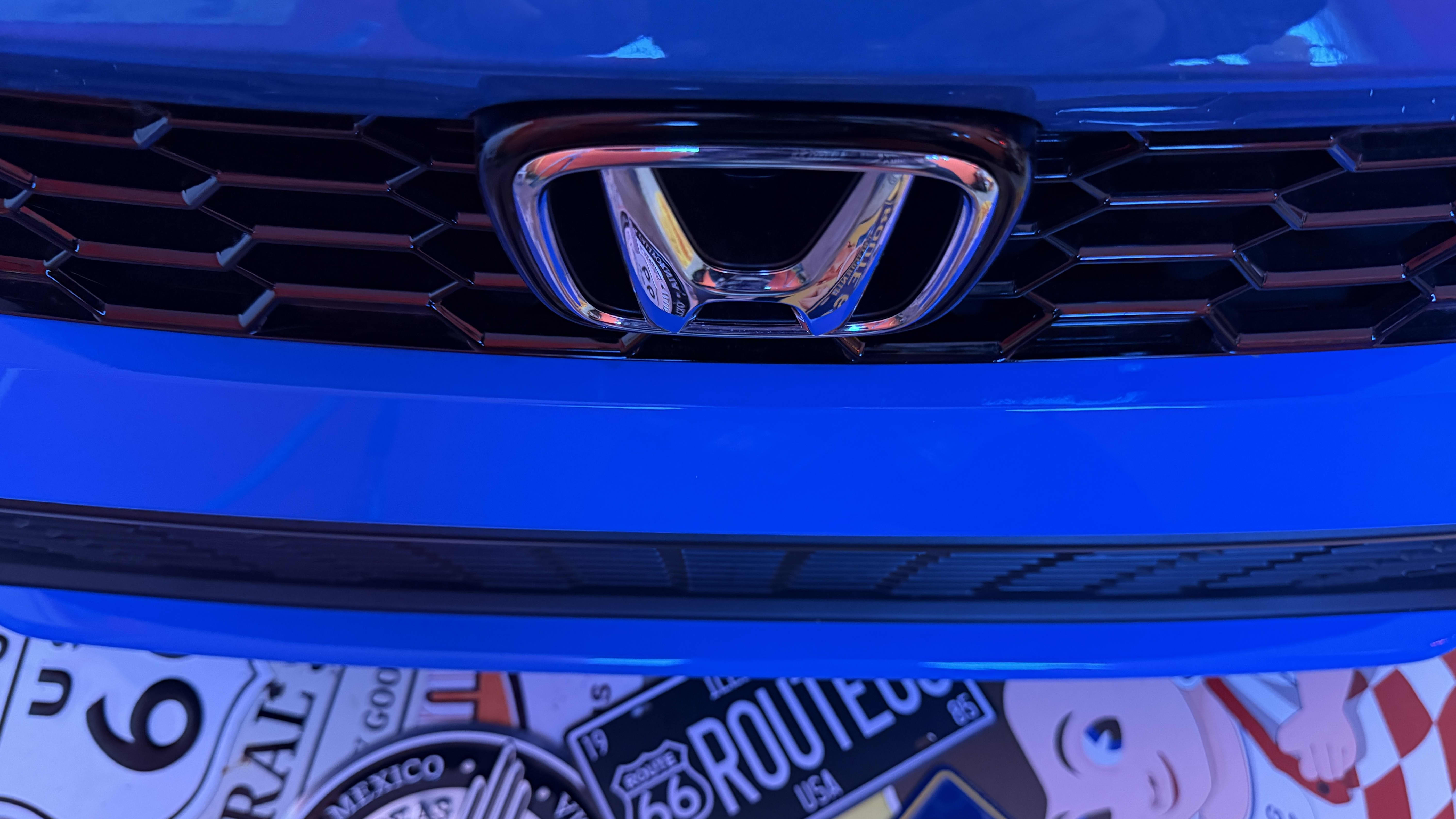
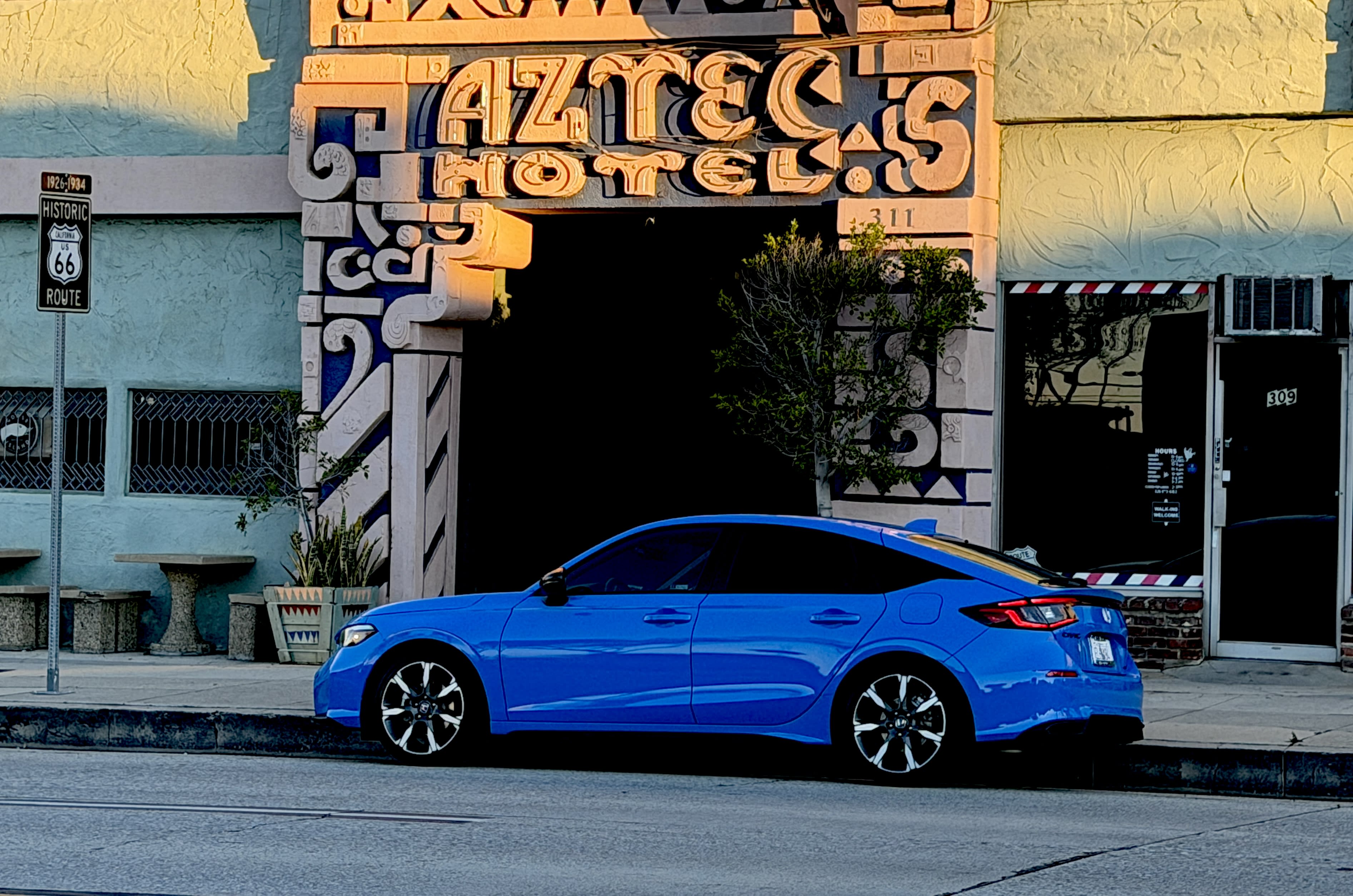
Featured image above: We review the quickest Honda that's not a Type R during the 100th anniversary of Route 66 (all photographs by the author).
Diversifying the Portfolio
No single factor was responsible for the recent pivot away from EVs and back toward hybrids, but that pivot is now in full swing.
For Los Angelinos, the power outages that followed the 2025 fires were a wake-up call that relying completely on electrification has its perils, just as relying on petroleum fuel could be problematic if stations ran out of gas (see LA Car's AM Radio for Disaster Preparedness).
Whatever factors tipped the scales (and there were many*), hybrids are now a hot commodity once again.
With remarkable prescience, Toyota’s “Beyond Zero” campaign embraced propulsion diversification and underscored the need for hybrid alternatives during the 2021-22 EV growth spurt.
Like Toyota, Honda stuck to its hybrid guns while other manufacturers seemed to abandon hybrids all together, putting their eggs in the EV basket.

And the times, they continue a-changing.
Honda vs. Toyota Hybrids
While Toyota’s hybrid technology credentials are second to none, Honda’s newest, fourth-generation two-motor electric hybrid system has been earning plaudits for refinement and drivability—in particular, the ability to drive more like pure EVs, without the CVT drone that often accompanies hybrids under hard acceleration or during passing maneuvers on the highways.
Honda’s latest hybrid system goes by the name e:HEV and is fitted to the current Accord, Civic, CR-V and Prelude.
How Honda’s e:HEV Works in a Nutshell
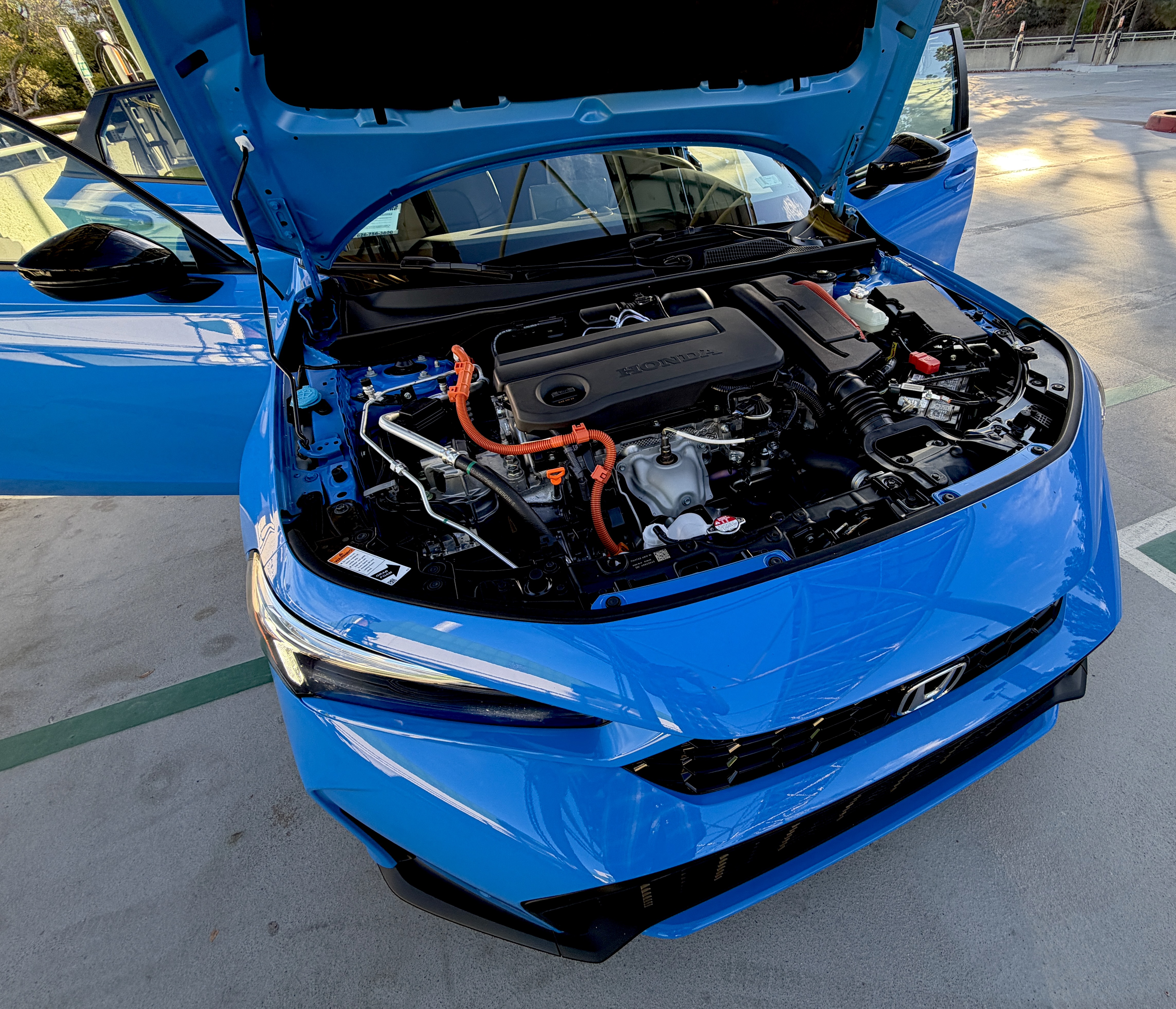
Honda’s e:HEV system consists of two electric motors and an internal combustion (IC) engine that switches between electric drive, hybrid drive and engine drive.
Most of the power comes from the dominant electric motor that directly drives the vehicle from zero to approximately 45mph, accounting for why the e:HEV system drives more like an EV at these speeds.
The second electric motor generates electricity, while the IC engine serves as a back-up electricity generator.
In this latter role, the IC engine operates in a manner reminiscent of the original Chevrolet Volt and recent extended-range EVs (EREVs) that use an IC engine as an electricity generator for the electric motor (the IC motor can be heard in the background when it engages this role).
Unlike the Volt or EREVs, a dual clutch system allows the IC engine to directly drive the vehicle at higher speeds (Honda’s e:HEV uses no CVT pulleys or belts).
As a result, the “rubber band” sensation and engine droning at high speeds associated with CVT-equipped hybrids is largely missing in Honda’s e:HEV system.
Stuffing the Accord/CR-V e:HEV into the Civic
This brings us to the subject of this Deep Drive review: The new Honda Civic Hybrid.

When Honda introduced its e:HEV system in the Civic for 2025, it essentially used the same electric motors and IC engine from the Accord and CR-V.
But with the Civic being approximately 250 pounds lighter than the Accord and nearly 700 pounds lighter than the CR-V, this turned the Civic Hybrid into a virtual sleeper pocket rocket.
Launch Control on a Hybrid?
The car under review is now the quickest 0-60 mph vehicle from Honda, outside of the Type R.
To get the best acceleration, however, performance testers have discovered a “launch control” procedure for the fastest 0-60 mph times:
1. Warm the powertrain—drive the car for a few minutes to ensure the hybrid battery has a sufficient charge (at least 3-4 bars on the power meter).
2. Select Sport mode—this is said to sharpen throttle response and prioritizes maximum electrical output).
3. Disable Traction Control—press and hold the stability control (VSA) button until the “Off” indicator appears on the dash to prevent the system from cutting power if the tires slip.
4. For the launch, firmly press and hold the brake pedal with your left foot while a a complete stop.
5. Quickly floor the accelerator with hyour right foot and hold 1-2 seconds (you will feel the powertrain loading up as it reaches peak torque).
6. Release the brake immediately while keeping the accelerator pinned to the floor.

Caveat—This procedure is not in the Civic Hybrid owner’s manual—nor have we seen any statements from the manufacturer to either condone or dissuade this launch procedure.
In contrast, note that Volkswagen does have a section on its launch control in the GTI owner's manual; but even Volkswagen warns its launch control causes significantly higher loads on the vehicle and frequent use can lead to premature wear of components.
How Quick is This Car?
Virtually every automotive journalist that’s reviewed the new Civic Hybrid tells us the Civic Hybrid is quicker than the sporty Civic Si from a standing start to 60 mph (but the Si is sportier; more on this later).
The comparisons don't end there. The 0-60 mph of the new Civic Hybrid compares favorably to some noteworthy milestone cars:
Volkswagen R32—It’s a virtual dead heat between the original R32 with a six-speed manual and the new Civic Hybrid.
Volkswagen GTI Mk5 & Mk6—The new Civic Hybrid is about a half second quicker than the first GTI equipped with the ground-breaking dual clutch, ultra-fast DSG transmission and launch control that proved to be quicker than its manual transmission version. The Mk6 GTI improved on the performance on the Mk5, but the new Civic Hybrid is still quicker.
1970 Chevelle SS454 LS5—We often look to the past with rose-tinted glasses. The times, they really are a-changing: The new Civic Hybrid is quicker than one of the legendary muscle cars of the 20th century.
2026 Honda Prelude—Despite using a virtually identical e:HEV system, the new Civic Hybrid has consistently been turning in better 0-60 mph times in published reports than the new, sportier Prelude.

Reality Check
The new Honda Civic may be quick, but there are quicker cars in the ballpark of the new Civic Hybrid’s retail price, including the Mazda MX-5 Miata Sport, the Dodge Hornet GT, the Toyota GR86, the Subaru BRZ, the newest VW GTI, and the Hyundai Elantra N (see LA Car's The Naughty and Nice Edition Elantra).
There’s one performance area the new Honda Civic stands apart from these noteworthy competitors: An EPA fuel economy rating of 50 miles per gallon in the city, 45/47 on the highway, and 48/49 combined (hatchback/sedan—the sedan gets slightly higher ratings).
If your pocketbook can stretch into the $40,000 price threshold, there are several EVs that can smoke the Civic Hybrid 0-60 mph. On the other hand, none of these will match the 500+ mile range of the Civic Hybrid without stopping for a recharge. And for the Honda Civic Hybrid, the “recharge” will be the time it takes to fill the tank with regular gas.
Quicker Doesn’t Always Mean Sportier
Another important reality check: A car that is quicker doesn’t necessarily mean the car is more fun to drive.
A case in point: The Civic Hybrid may be quicker than the Civic Si, but the latter (which can only be fitted with a 6-speed manual transmission) offers a more engaging drive.
Push the pedal to the metal on the Civic Hybrid, and the car rewards you with brisk acceleration and the simulated sound of a high performing internal combustion engine going through the gears.
In Sport mode, the car will even amplify the sound of the engine back into the cabin through the speakers in a manner that brings to mind the GTI’s Soundaktor (see the Max Lee Music caption in LA Car’s The Final Stick Shift GTI story).

It’s mildly reminiscent of the “Ignition” mode in the Ioniq 5N, but doesn’t go nearly as far as the 5N’s N Action Sound+ option (see the “Select the Multiverse of Your Choice” section in LA Car’s Everything, Everywhere, in the Hyundai Ioniq 5N).
Accordingly, you can’t control the simulated shifting. The car has paddle shifters, but they only control the amount of regenerative braking—and even that is limited, as the car does not provide full, one-pedal driving (evidently an inherent limitation of hybrids due to the small size of the battery compared to full EVs).
In contrast, the Civic Si with its buttery smooth manual transmission provides abundantly more engagement as the driver keeps the car in the optimum gear.
In short, the Si is more fun to drive. The same, evidently, is true of the new Prelude, which allows the driver to manually control simulated gear changes through the car’s S+ mode (Note: Honda has annoiunced S+ Shift will be available on the Civic Hybrid later this year, possbly for the model year 2027).
A Sporty Hybrid
While the Civic Hybrid can’t match the sportiness of cars like the Civic Si or the newest GTI, it is miles ahead of the typical hybrid family car in this regard.

Under hard acceleration, most CVT-equipped hybrids will respond with an un-sporty-sounding droning from the engine compartment.
Honda has managed to avoid this with its four models equipped with the e-HEV system, but the performance benefits are most noticeable in the lightweight and sporty-handling Civic.
Analytics Isn’t Just for Baseball
A look at the list of standard equipment in the Civic Hybrid specifications below, one can’t help being impressed—particularly the safety features on the car, which include the Honda Sensing® suite (Collision Mitigation Braking, Road Departure Mitigation, Adaptive Cruise Control, Lane Keeping Assist), blind spot information system, and front/rear parking sensors.
The Civic Hatchback Sport Touring Hybrid even has active noise cancellation (speakers emit a 180-degree soundwave that is the polar opposite of the cabin noise to reduce noise in the passenger compartment) and Helmholtz resonators in its wheels (to mitigate wheel and tire-induced noise).
So, it’s a bit of a surprise that Honda left out certain amenities from its top-of-the-line Sport Touring edition of the Civic Hybrid—i.e., no heated steering wheel (available on Canadian models), no heated rear seats (available on Canadian models), no 360 degree “bird’s eye” view camera (not offered on the Accord either), no height adjustment on the front passenger seat (not offered on any Honda Division product), and no center console-mounted air vents or USB ports for rear passengers (available on certain European Civics, but floor-level rear AC/heater ducts are standard on all US models).
There has been a long-standing perception that U.S. consumers equate small cars with cheap cars.
So, one wonders if the analytics team concluded the added production costs didn’t justify offering these features to American consumers (many of these are offered to Canadian consumers, however).
Perhaps they concluded none of these were deal-breakers for the prospective U.S. Civic buyer?
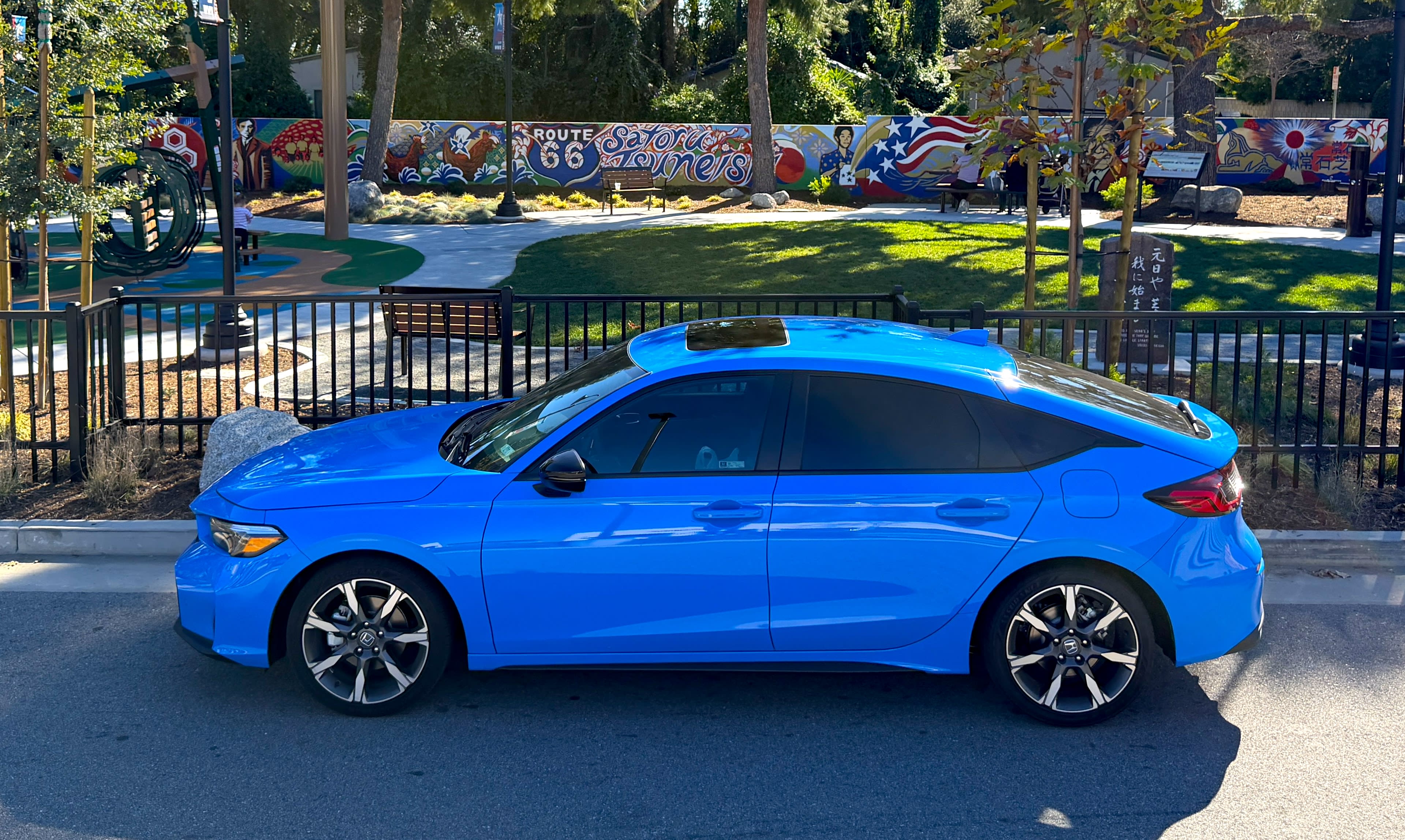
Honda has done a good job of maintaining the Civic’s decades-long reputation of being the brand’s economical yet sporty model.
About the only area the Civic has strayed is in its size: Today’s Civic is larger in most dimensions than the midsize Accords of the 1980s.
The Press Weighs In
When the new Honda Civic Hybrid debuted in 2025, a panel of 50 journalists were impressed enough to name it the North American Car of the Year.
The e:HEV played a key role in elevating the Civic line in the hearts and minds of the automotive press. Among the other accolades it received: Canadian automotive journalists named it the Car of the Year for 2026, Car and Driver included it among its 10 Best for 2026, Consumer Reports proclaimed it one of its 10 Top Picks for 2026, the publication Drive named it Drive Car of the Year – Best Urban Car Under $60K, Edmunds named it Top Rated Car and Best of the Best for 2026, What Car? named it the Family Car of the Year for 2026, and Wards Automotive included the Civic Hybrid’s hybrid system among its 10 Best Engines and Propulsion Systems for 2026.
Embracing the Noise
Through 11 generations, the Civic’s DNA has consistently yielded a car that is both lightweight and light on its feet.
Even though the chassis was strengthened for the model year 2025 refresh and sound deadening was added to the doors, floor and trunk of the Sport Touring Hybrid, Honda has been careful about adding weight to the Civic.
As a result, the Civic is not particularly quiet at speed—and this includes the Sport Touring Hybrid model with its active noise cancellation and noise reduction Helmholtz wheel resonators.

The trade-off does have benefits. As Brian Normile of Cars.com recently said,
“In my mind, there isn’t a four-door car in the $30,000 price range that’s more fun to drive than the Civic—and that’s not even counting the fun Civic Si. Its steering feel and chassis control are excellent, and its ratio of smiles per mile rivals even lower-priced sports cars like the Mazda MX-5 Miata or Toyota GR 86 and Subaru BRZ twins (and those are all rear-wheel drive only, unlike the front-wheel drive Civic).”
Inside Looking In
The cabin of the 11th generation Civic has aged well since it first took home a Wards Automotive 10 Best Interiors award.
Honda went conservative, steering away from the Tesla-led trend to relegate everything to a center screen.
Still, they managed to keep the dashboard clean, intuitive, and tastefully executed, with HVAC controls operating with satisfying clicks.

That honeycomb mesh accent that spans the width of the dashboard lends an upscale touch. It looks like real metal because it is (yes, magnets will stick to it, but it's likely not intended for that purpose).
The design has been a springboard for the interiors of the remaining Honda line, but none have topped the execution in the Civic.
It’s also nice to see a conventional, console-mounted shifter with leather and metal accents on the Civic Hybrid. On oh so many of the newer cars, we’ve been seeing the shifter being replaced by tiny buttons and switches.
Despite the new technology presented by Honda’s latest e-HEV, it’s nice to see the Civic retaining some old school touches.

The New American Hot Rod?
Back when LA Car began publishing in the 1990s, we called the Honda Civic the New American Hot Rod.
By then, tuner Civics and Integras had replaced American muscle cars in San Gabriel Valley high school parking lots.
Racing legend Stephan Papadakis broke the 9-second quarter mile drag racing barrier (and later the 8-second barrier) in a front-wheel drive modified Civic.
In 2001, heavily modified black Honda Civics were prominently featured in The Fast and the Furious to hijack semi-trucks (see Mark Vaughn’s Autoweek story, This Fast and the Furious Franchise was inspired by this very real racing phenomenon).
Import tuners became an aspirational mode of transportation and Honda has been making sure Civics remained on the wish list with cars like the Civic Type R.
Are Civics Theft Magnets?
A friend asked a question that threw me for a loop:
“I was wondering if this Honda would be a ‘hot’ car for auto thieves. Hondas used to be notorious for break-ins for auto parts.”
She was referring to insurance data that once listed Honda Accords and Civics among the most popular cars for theft in America.
While newer Hondas are not as easy to break into as older models, the models remain popular and auto parts demand remains high.
As for the new Civic Hybrid, one would think it’s less of a target, as the complexity of the e:HEV system makes it difficult to swap into an ICE-powered Civic. And it's not like droves of hybrid cars are flanking the hot rod shops.
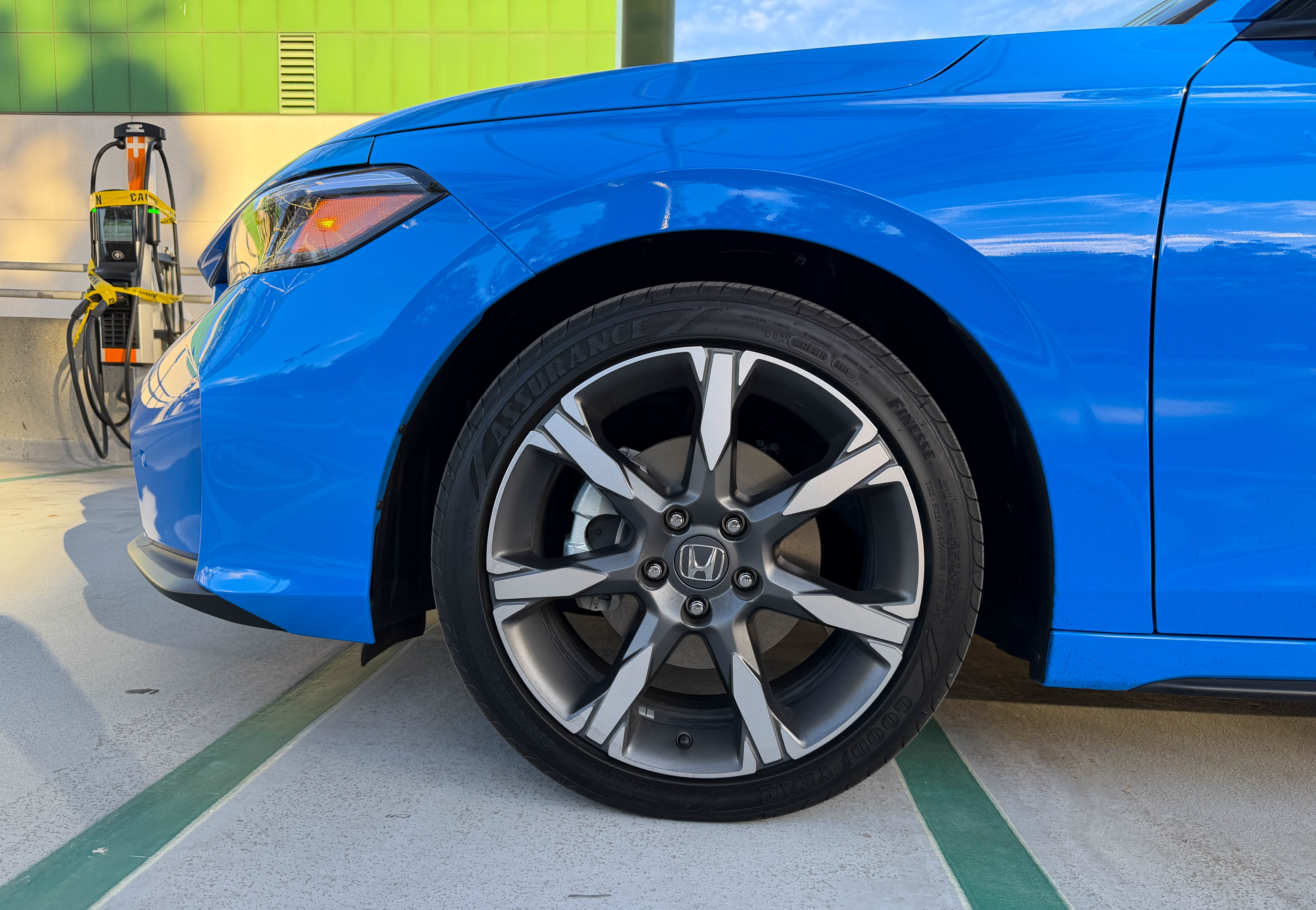
On the other hand, the black wheels that come standard on the base model Sport Hybrid (the same ones on the non-hybrid Sport) remain popular.
The wheels on the Sport Touring Hybrid do have noise reduction resonators but the design (which looks like seven German V-2 rockets converging) does not carry the popularity of the black rims on the Sport models within the tuner community.
In the past few years, late model Hyundais and Kias seem to have displaced Hondas as popular targets of thieves—primarily due to a security vulnerability affecting the Hyundai Motor Group’s 2022-2024 models.
The Hatchback as an SUV alternative
The Honda Civic Hatchback Hybrid Sport Touring makes an interesting alternative to the popular SUV. It’s hatchback design affords 24.5 cubic feet of space (46.2 with the rear seats folded down).
It’s significantly more than the 14.8 cubic feet trunk space of the Civic sedan, even though the hatchback is 5.8 inches shorter.
Owners have reported transporting all manner of items in the 11th generation Civic Hatchback, ranging from 65-inch TVs (in the box), to various IKEA furniture, to a bicycle with both wheels on (size dependant), to “a family of four plus a week’s worth of luggage for a road trip”, to 15 carry-on suitcases or 7 checked suitcases (with the rear seats down), to sets of four wheels and tires, to (take a deep breath) a washer or dryer.
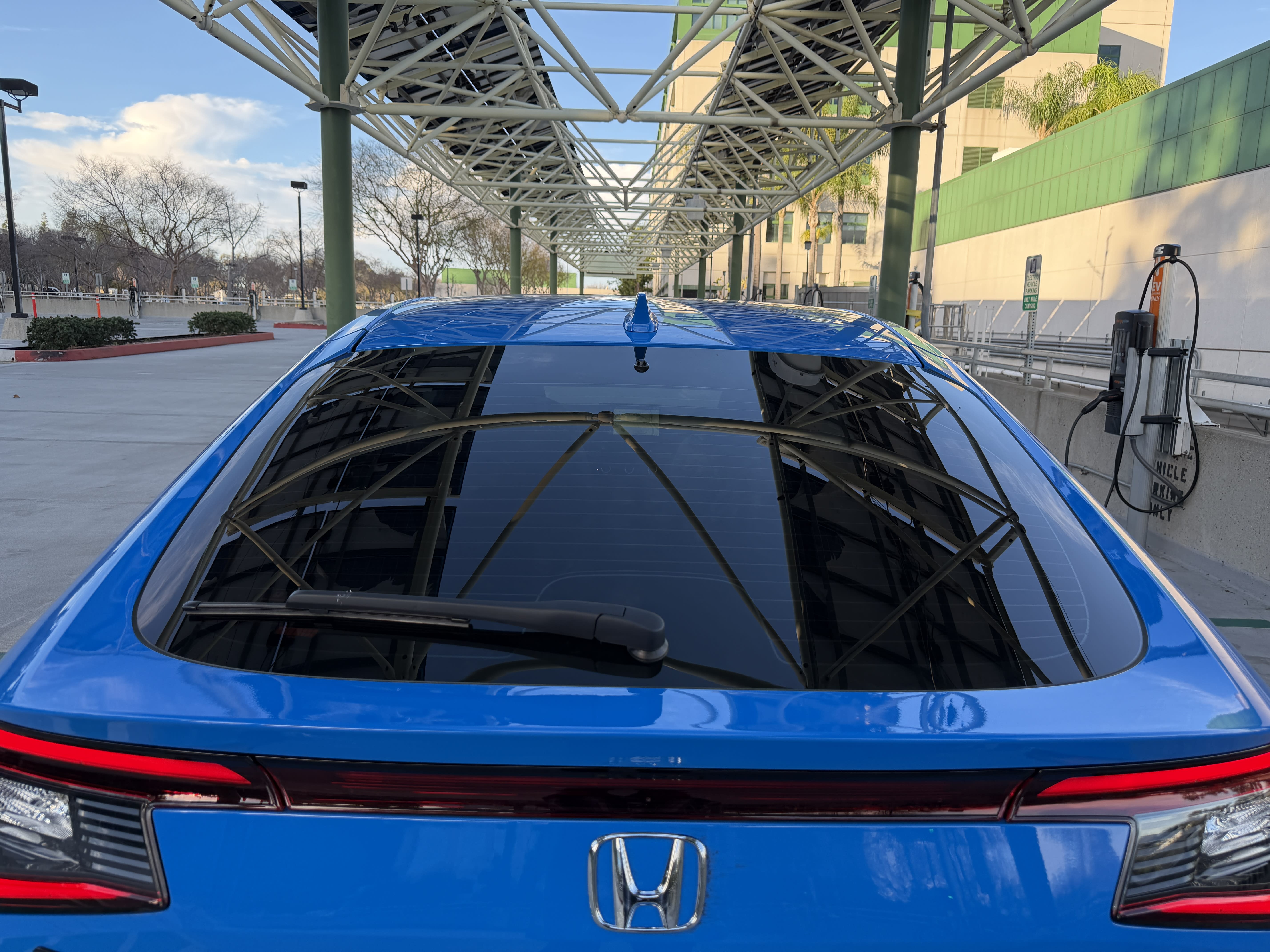
But don’t drivers see better out of an SUV?
Many consumers opt for SUVs for better distant viewing over traffic due to their higher seating position, but SUVs often provide a false sense of security and safety. Consumer Reports Senior Autos Reporter Keith Barry wrote about an Insurance Institute for Highway Safety study last year:
“As SUVs have grown in popularity, automakers have given them more aggressive exterior designs that have reduced forward visibility. For example, drivers of a 1997 Honda CR-V could see 68 percent of the area 33 feet in front of the vehicle, but drivers of a 2022 model can only see 28 percent of that same area.”
The study found that SUVs often offer inferior immediate visibility compared to cars and that the elevated height often created massive front blind spots—sometimes three times larger than cars—making it difficult to see directly in front of the vehicle.
“Part of the appeal of taller and higher vehicles is that drivers often feel they have a commanding view of the road around them," said Jennifer Stockburger, then director of operations at Consumer Reports’ Auto Test Center. "But this study shows just the opposite. The amount drivers can’t see is actually increasing.”
According to Stockburger, IIHS president David Harkey said the trend may be at least partially responsible for the 37 percent increase in pedestrian fatalities and 42 percent increase in cyclist fatalities on U.S. roads during the same time period.
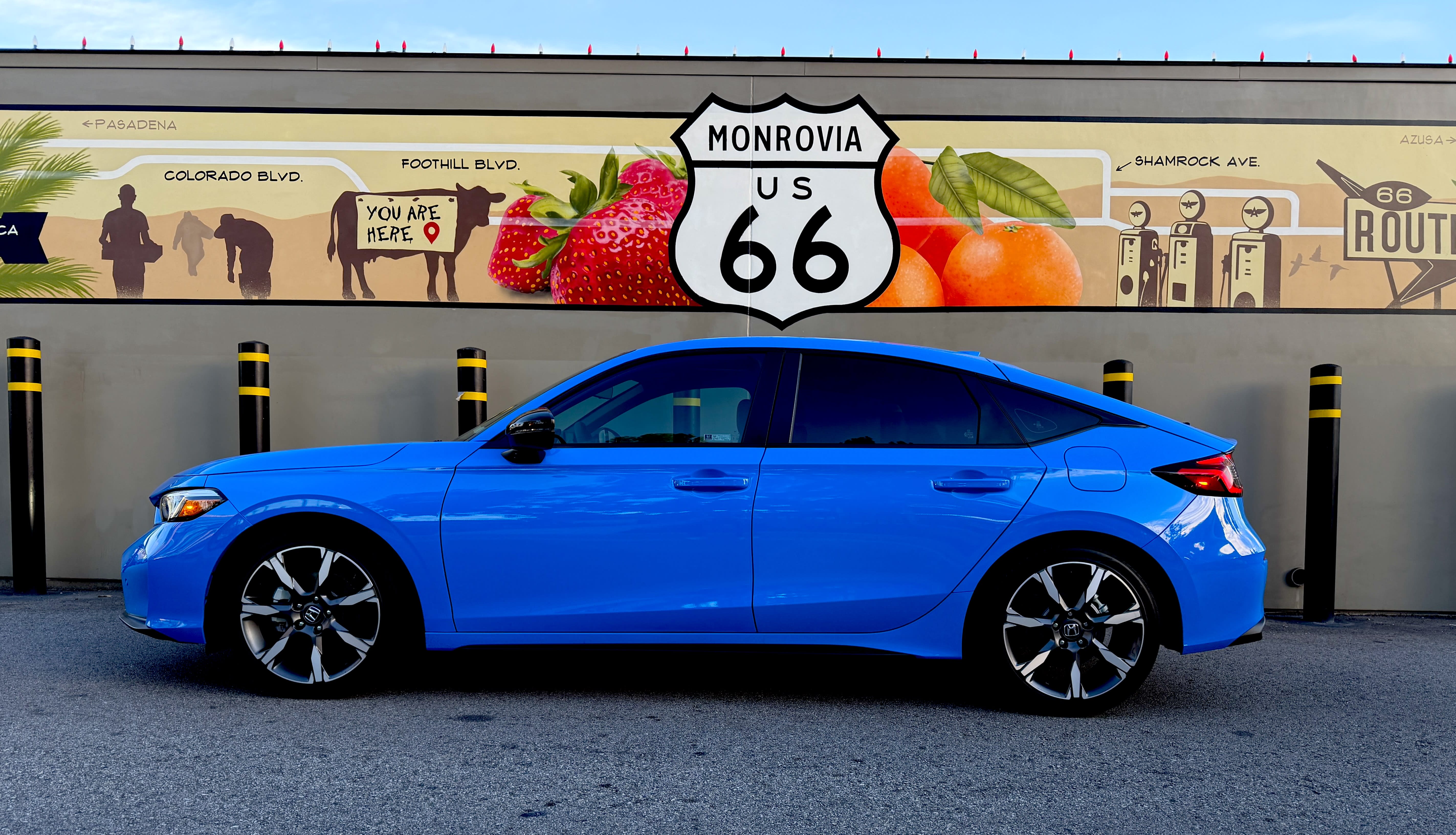
Civic Hatchback Visibility
The press has generally praised the 11th-generation Honda Civic Hatchback for its forward and side visibility, largely due to a low beltline, repositioned side mirrors, and slim A-pillars.
While front visibility is considered a strong point, the rearward view is restricted due to a sloping roofline and small rear window.
The base Civic Hybrid Sport model includes the Honda Sensing® Suite (automatic braking, lane-keeping assist, collision mitigation braking, road departure mitigation, and adaptive cruise control), the Sport Touring adds front/rear parking sensors, low-speed braking control, and enhanced rear cross-traffic monitoring.
While top-of-the-line models are typically not recommended for cost conscious consumers, the Sport Touring Hybrid is recommended for maximum driver confidence and minimum stress during low-speed maneuvers (e.g., parking space ingress and egress).

But Wait, There’s More
We pay close attention to what others have said about the reviewed vehicle, both in written and recorded form. We think the best ones should be highlighted. So, that’s what we’ve done as part of this Deep Dive Review.
In The Honda Civic Hybrid One-Stop Shop below, we’ve gathered what we think are the best and most informative videos, articles, and forums on the vehicle.
By the way, if you think we overlooked an article or recording that should be included, please let us know.
* Among the factors that contributed to the pivot away from pure EVs: High prices, the realization of substantially lower range in ultra-cold climate, the elimination of government subsidies, poor resale value, and the impact of power outages.
Another factor: The 2025 J.D. Power U.S. Vehicle Dependability Study asked 34,000 owners of 2022 model vehicles about problems in nine categories, ranging from powertrains to infotainment systems. Hybrid vehicles experienced the fewest problems, followed by conventional gasoline-powered vehicles, then EVs, and then diesel vehicles. Plug-in hybrids experienced the most issues in the survey (Westways, Fall 2025).
The Generation 11 Honda Civic Hybrid One-Stop Shop
We’ll save you some time in researching the Honda Civic Hybrid. Here are our picks for the best videos, online articles, and forums on this car.
YouTube Videos to Watch
LA Car's Harold Osmer produced a video review of this car as a part of his YouTube podcast. See Retro Race Report's 2026 Honda Civic Hybrid Review.
Honda Civic Factory tour: Secrets of US Honda $3.9 Billion Car Factory; Inside Honda Assembly line (USA Assembly Lines - the first 90 seconds devoted mostly to the Honda Civic Hatchback; 10th generation Civic production picks up near the 33 minute mark)
2025 Honda Civic Hybrid – Best Car for $30,000 (savagegeese)
Honda Killed the Civic Turbo for THIS? (Brian Makse)
How We Chose Our 2026 Top Picks (Talking Cars | Consumer Reports)
Motormouth Car of the Year – 2025 Honda Civic Hybrid Hatchback (Motormouth)
Picking Out the Best and the Worst Hondas of 2026 (BC Auto Solutions specializes in Honda repairs)
Picking the Best Hybrid Sedan (savagegeese on the Civic, Prius & Elantra)
The Wheel Networks’ footage of 11th generation Honda Civic Hatchback production at Honda Manufacturing of Indiana
"World's Best Compact Hybrid Sedan: 2026 Honda Civic Hybrid" - Engineer David Chao's review (AutomotivePress)
Recommended 11th Gen. Honda Civic Hybrid articles:
Honda Civic is named most reliable new car for the money (iseecars.com)
Honda Civic Named North American Car of the Year (Honda Motor Co.)
The Honda Civic Sport Touring Hybrid Out-Germans the Germans (Motor Trend)
New Prelude Quicker with Launch Control Trick, Still Loses to Civic (carscoops.com)
Weight-Cutting Measures on the 11th Generation Civic Hatchback (Mobility Engineering)
Recommended 11th Gen Honda Civic Forums
The most popular online communities for the 11th Generation Honda Civic Hybrid (2022+) include specialized Facebook groups and Reddit, where enthusiasts discuss models and performance. Top forums include the 11TH GEN CIVIC FORUM, Honda Civic Hybrid Forum (civic11forum.com), 11th Gen Honda Civic Owners Group, and the r/civic subreddit.
· 11TH GEN CIVIC FORUM (Facebook): A large, dedicated group for 2022+ Civic owners.
· Honda Civic Hybrid Forum (Facebook): A group focused on the 11th Gen Hybrid variant.
· 11th Gen Honda Civic Owners Group (Facebook): A community for sharing, modding, and troubleshooting.
· r/civic (Reddit): A general Honda subreddit where owners discuss 11th gen hybrid driving dynamics and performance.
The Pertinent Specifications
Name of Car
2026 Honda Civic Hatchback Hybrid Sport Touring
What’s New for 2026
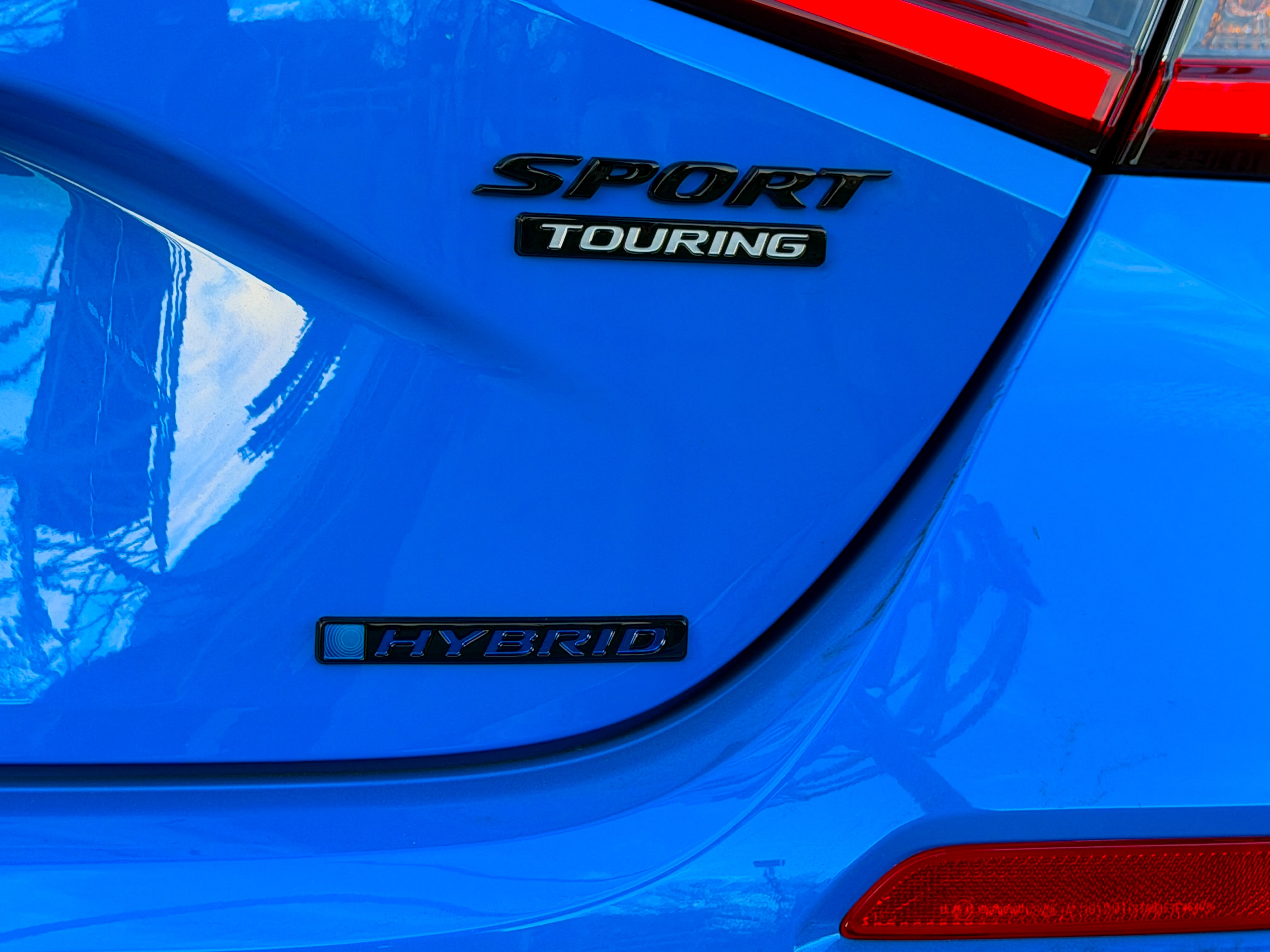
The 2026 Honda Civic Hybrid Sport Touring introduces minor updates over the major ones in the 2025 model, focusing on enhanced, standard safety features like Rear Cross Traffic Alert, a revised Driver Attention Monitor, and the addition of Google Built-in. Rear Sport, Touring, and Hybrid emblems are now finished in black rather than chrome.
Prices
$29,295 for the base Civic Sedan Hybrid Sport
$32,295 for the base Civic Sedan Hybrid Sport Touring
$33,495 for the Civic Hatchback Hybrid Sport Touring
$35,145 (as tested for the Civic Hatchback Hybrid Sport Touring
with $455 optional Boost Blue Pearl paint and destination charges)
Standard Features (Sport Touring)
Four-mode drive system (ECON, Normal, Sport, and Individual modes – to adjust power delivery, suspension/handling, steering effort, engine sound), noise-reducing wheel resonators, steering wheel-mounted deceleration selectors to customize the level of regenerative braking, leather-trimmed seating, heated front seats, 8-way power driver's seat, power moonroof, dual-zone automatic climate control, leather-wrapped steering wheel, 9-inch color touchscreen, 12-speaker Bose premium sound system (includes additional floor dampening and active noise cancellation), wireless Apple CarPlay/Android Auto compatibility, wireless phone charging, 10.2-inch digital instrument cluster, Honda Sensing® suite (Collision Mitigation Braking, Road Departure Mitigation, Adaptive Cruise Control, Lane Keeping Assist), blind spot information system, front/rear parking sensors, rain-sensing windshield wipers, 18-inch alloy wheels, LED headlights, and heated power mirrors.
Type of vehicle: 5-door hatchback
Drive configuration: Front-wheel drive
Propulsion
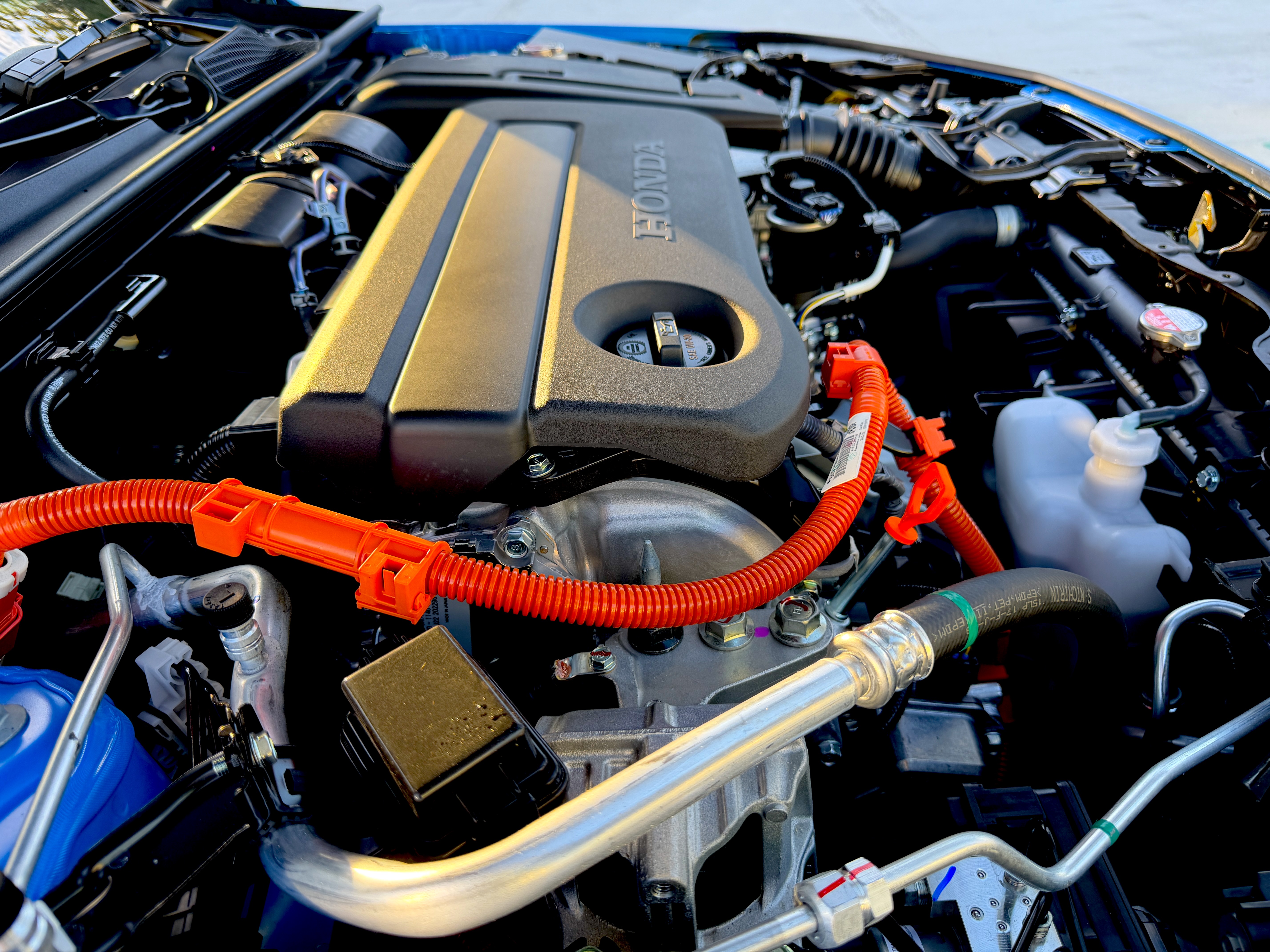
Hybrid electric, with two AC synchronous permanent-magnet electric motors and one 2.0-liter DOHC VVT-i Atkinson four-cylinder internal combustion engine
Horsepower and Torque
1st electric motor: 181hp @ 5,000-6,000rpm; 232lb-ft at 0-2000rpm
2nd electric motor serves as a generator to charge the battery
Atkinson engine: 141 @ 6,000; 134 @ 4500rpm (hybrid)
Combined: 200hp and 232lb-ft
Transmission
A dual clutch eCVT (no pulleys or belts) serves to directly drive the 1st electric motor at lower speeds and the Atkinson engine at higher speeds.
Fuel Economy
Sedan: 50mpg city/47mpg highway/49mpg combined
Hatchback: 50mpg city/45mpg highway/48mpg combined
Observed: 51.3mpg combined, in warm, California weather.
Estimated range on a single tank, combined driving:
519 miles (sedan); 509 miles (hatchback)
0-60 mph performance: 6.1-6.2 (with brake torquing)
EPA size classification: Midsize
Location of final assembly: Greensburg, Indiana
For a Facebook gallery of the 11th generation Civic Hatchback Hybrid, click here.
For more information about the Honda Civic Hatchback Hybrid, click here.
For more information about the Honda Civic Sedan Hybrid, click here.
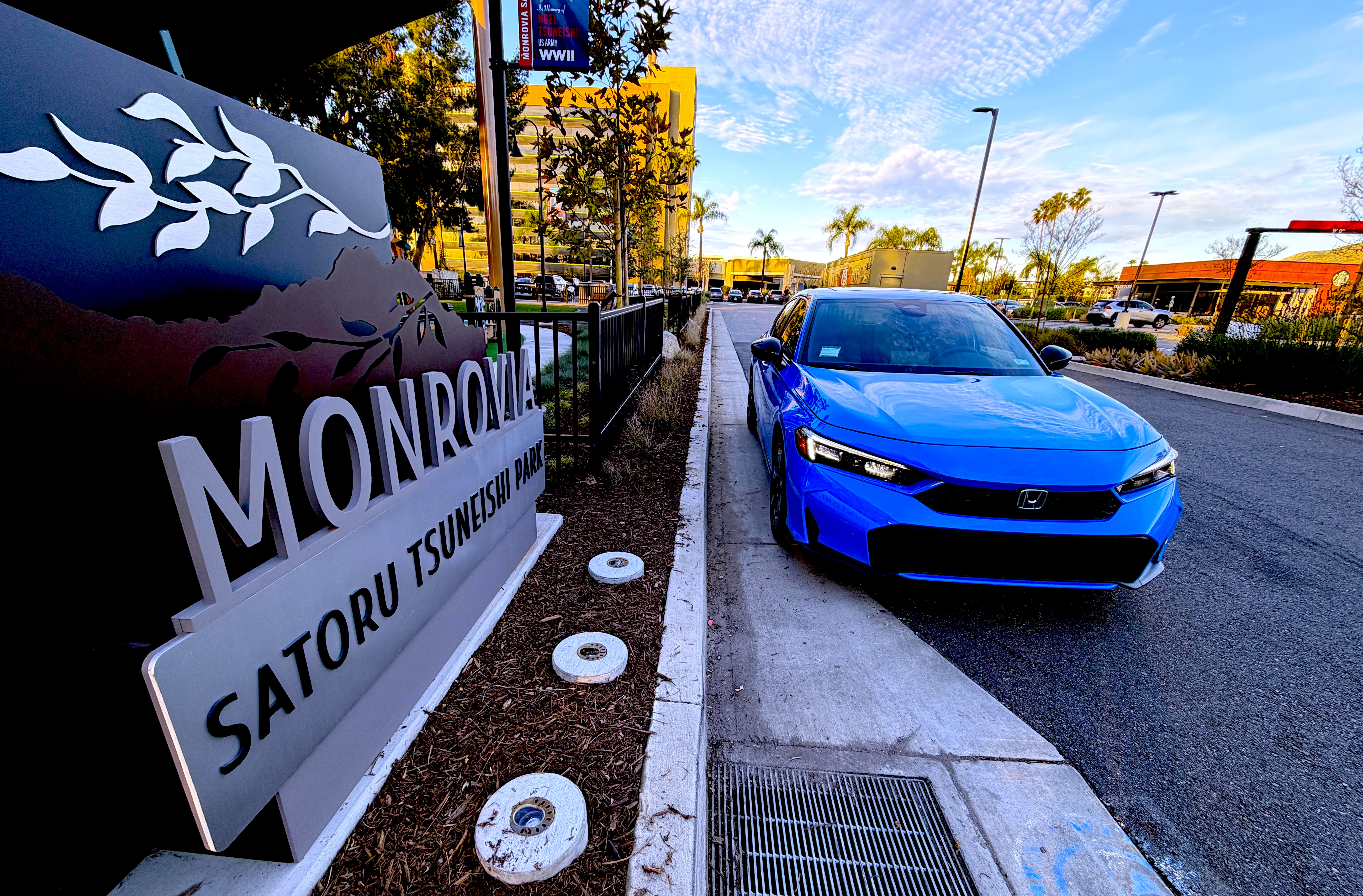
Satoru Tsuneishi Park
1111 Encino Avenue
Monrovia, California 91016
just off of the Huntington Drive offramp on the 210 Freeway
Behind the Chick-Fil-A
More on Satoru Tsuneishi
About The Author

Roy Nakano gave birth to LACar in the late '90s. As LACar's Editor, Roy shapes the content and assigns the stories. As a writer, Roy likes to stray off the beaten automotive path: "Six Degrees of Reparations" reflected on the ethical limits taken by car companies throughout history. "Traveling Through the Past and Present of the Green Book" looked at businesses that took a stand and the man that wrote the book. "Best Cars to Drive in Rush Hour Traffic" was an LACar guide published in the pre-GPS era. "In Search of the First Datsun 510 Tuner" looked at one of the milestones in the origin of import tuners. And "Us vs Them" examines the instances when rivalry among automotive enthusiasts crossed the line to violence and even death.