
A PRACTICALLY COOL PRIUS PLUG-IN HYBRID

We review the 2026 Toyota Prius Nightshade XSE Plug-In Hybrid. The Prius has never been cooler.
By Glenn Oyoung & Roy Nakano
Fri, Dec 12, 2025 12:59 AM PST
Featured image above: The 2026 Toyota Prius Nightshade XSE Plug-In Hybrid Electric Vehicle in Karashi Yellow (Oyoung photograph).
Back in the early 2000s, the Toyota Prius was more than a car. It was a prop. Hollywood loved it.
As a Curb Your Enthusiasm fan, the word “Prius” instantly brought up images of Larry David behind the wheel on his way to some hilariously awkward moment.
The world’s most anxious environmentalist paired with the world’s most fuel-efficient car felt like fate.
For much of the early aughts, the Prius on screen and in real life was driven by people who cared about the planet, or at least wanted to look like they did.
Today, with California gas prices floating above five dollars a gallon, that signal has evolved.
Driving a Prius is not about loving the Earth anymore; it is about loving your FICO score.
The first Prius managed about 41 mpg, and the 2026 Prius Nightshade XSE Plug-In Hybrid hits 48 mpg in hybrid mode.
That is great for your wallet, and for the first time in Prius history, the car looks so good it might make financial responsibility cool.
A Face That Means Business
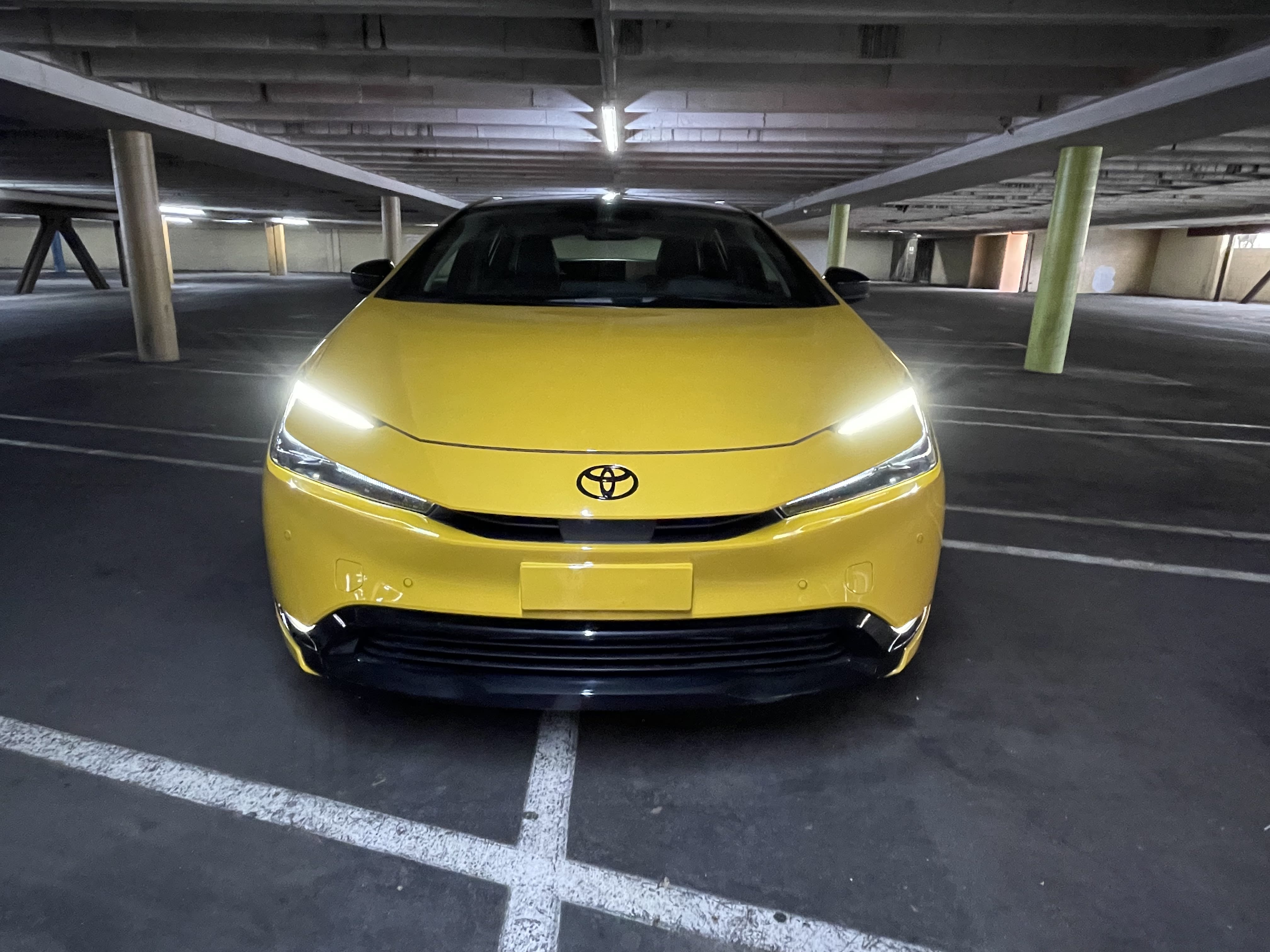
My first real look at the current fifth-generation Prius came from a Jon Sibal rendering. He dropped the new Prius headlights and front end onto a GR86, and it looked so good that I wanted that face on everything.
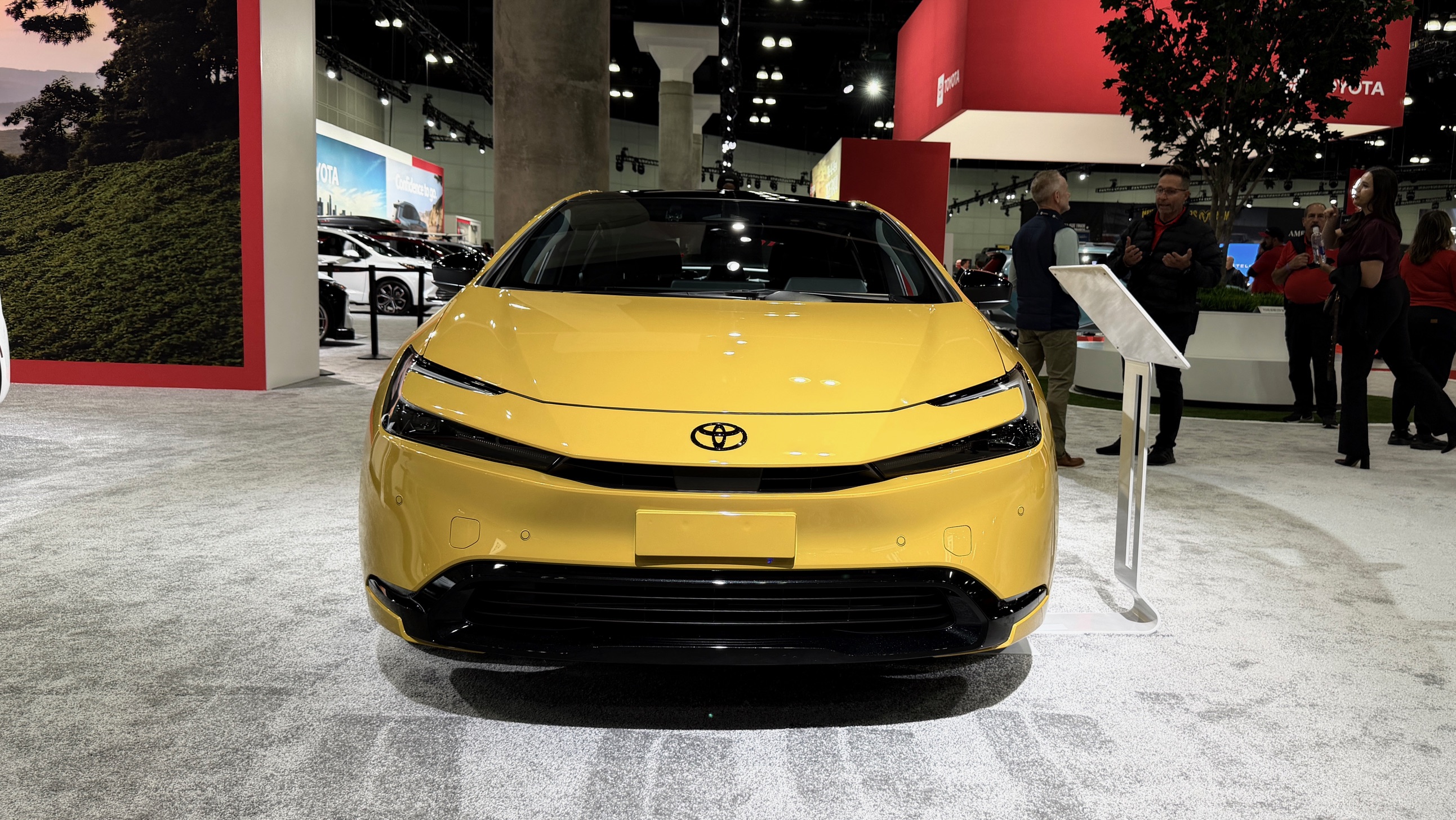
I might get my wish. The fifth-generation Prius carries Toyota’s new “hammerhead” shark face, a sharp and futuristic look that is now spreading across the lineup from the Camry to the Crown.
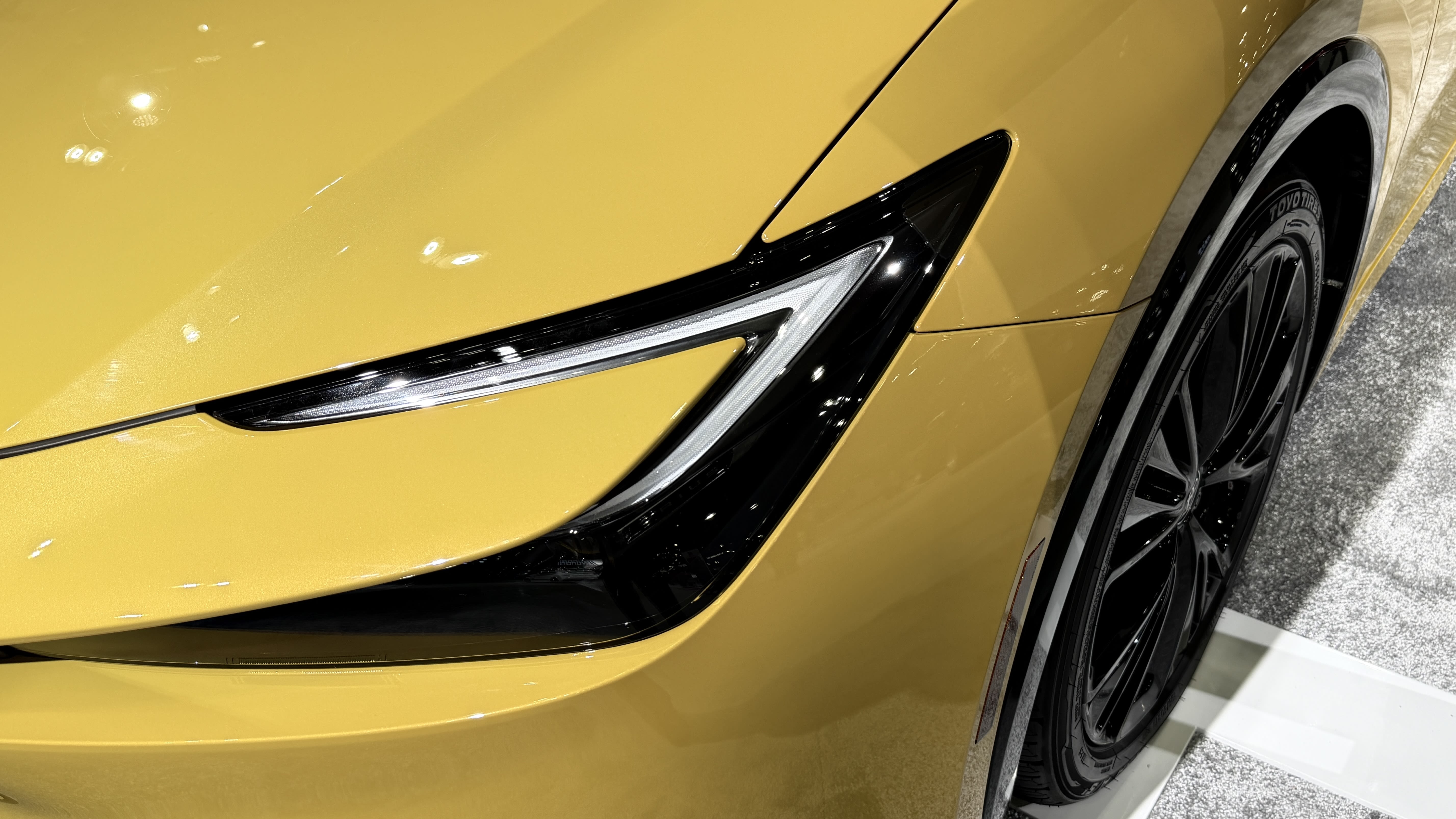
On the street it reads lower and wider than it actually is, and those slim LED headlights give it a focused, slightly predatory stance.
The GR86 has not picked up this front end yet, but it feels like only a matter of time. Even Honda’s upcoming Prelude is moving in the same direction, which tells you this design language is where the market is drifting.
As a former Prelude owner, I am all for it. What started as a pure efficiency experiment suddenly looks like something you might buy because you want it, not because you are trying to save the planet.
A Yellow Worth Talking About
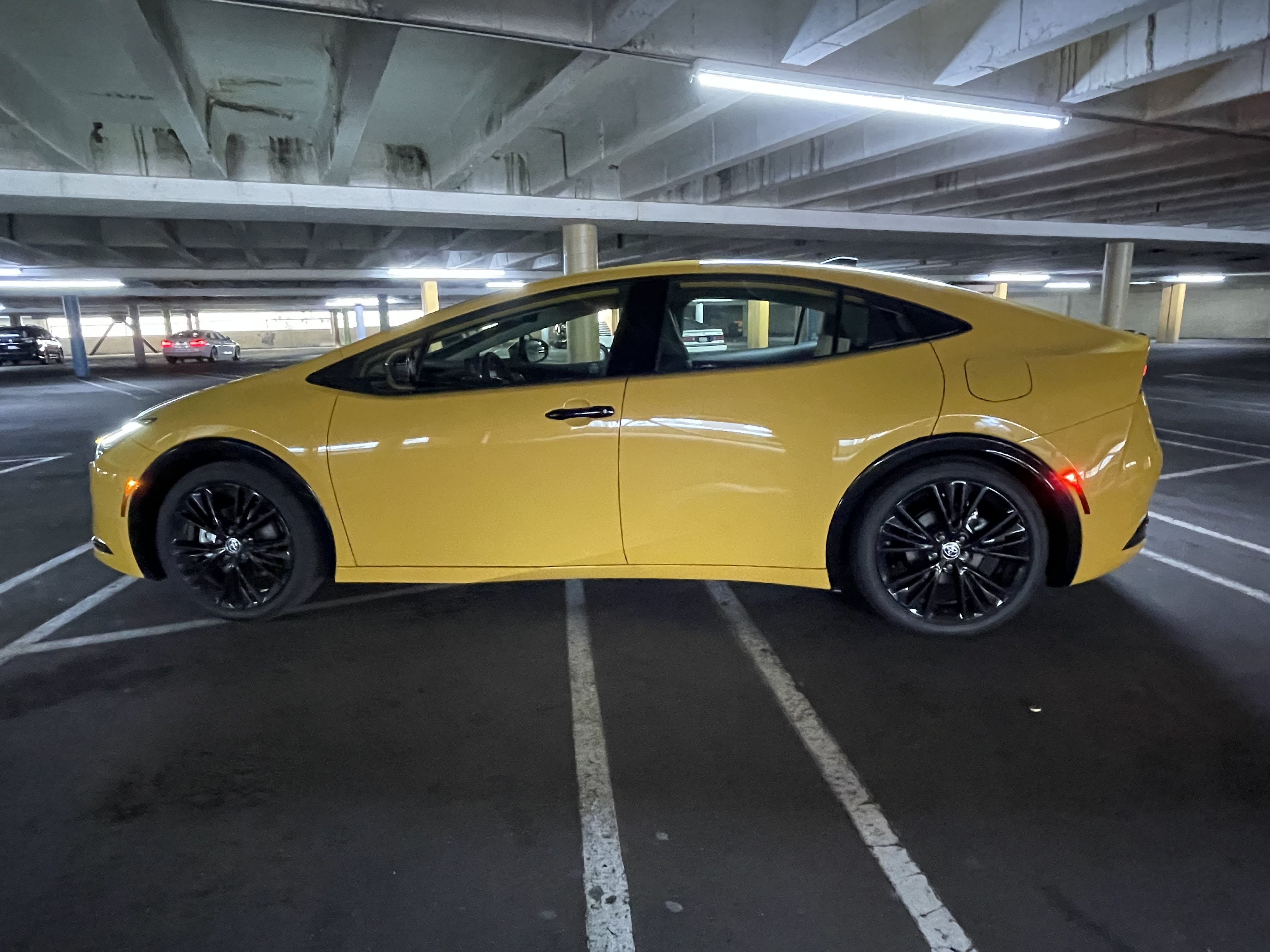
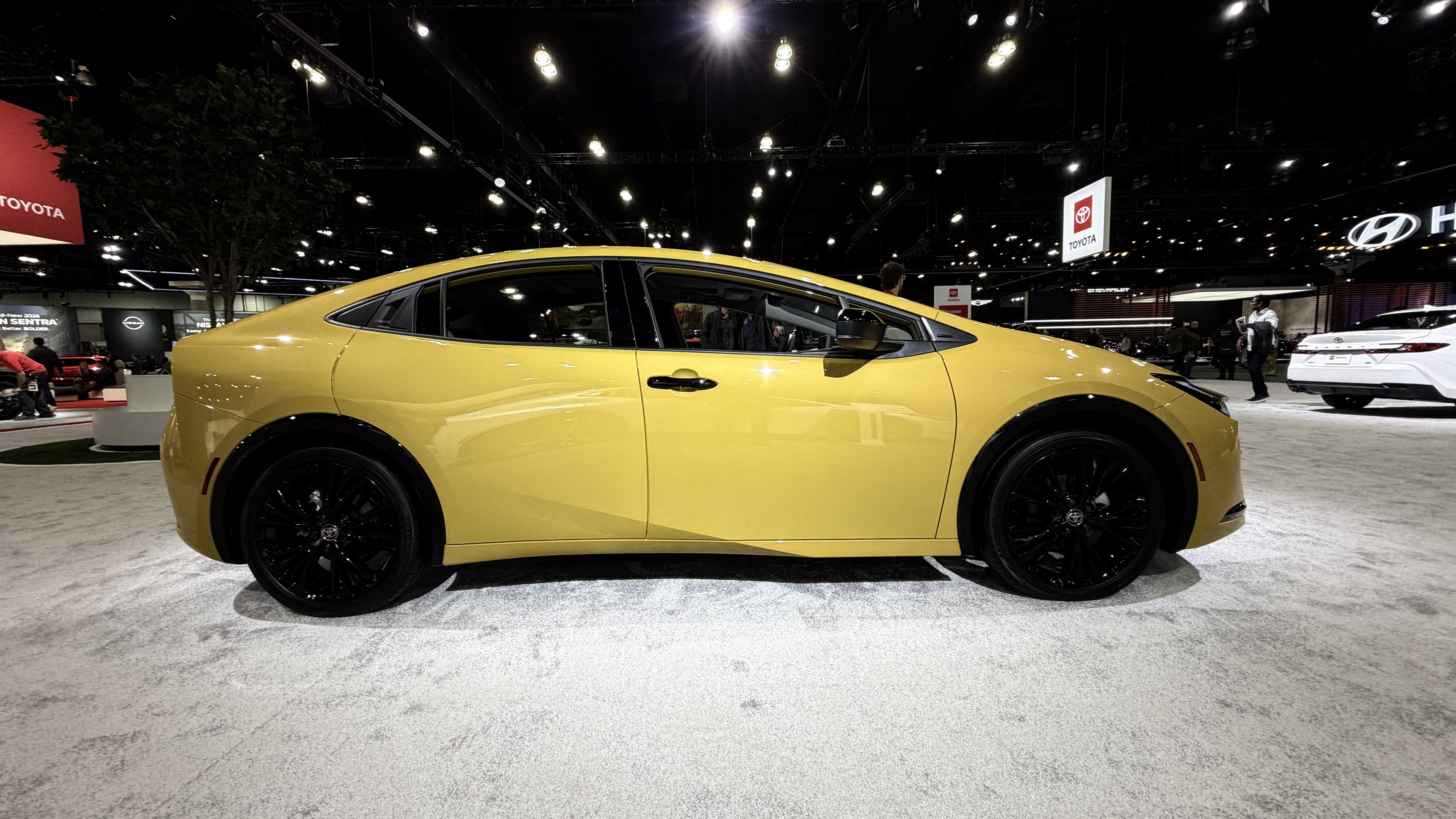
Officially called Karashi Yellow, this color deserves its own spotlight.
I used Nitro Yellow from the GR Supra when it came time to paint the Carcadia 57 Chevy, and while this hue is in the same family, it is different. It is deeper and more sophisticated, with a mustard undertone that gives it presence instead of flash.
Pair that with the Nightshade Package, which features black 19-inch wheels, black badging, and black trim, and you get a Prius that looks genuinely sporty.
Mean adjacent.
Maybe it is the Jon Sibal rendering talking, but I can easily imagine Liberty Walk building a kit for it with wide fenders and a big wing. It would fit right in at any SoCal meet.
Real-World Run to Fresno
I took the Prius Prime Nightshade because I had the perfect test ahead of me. I needed to run from L.A. to Fresno and back in a single day, a long haul that gives you the truth about a car fast. Hours of highway, shifting traffic, and enough miles to see what holds up and what does not.
A trip like that shows everything. If the seats are wrong, you notice by Bakersfield. If the fuel economy is inflated, the gauge exposes it. If the cabin gets loud, the Central Valley will underline it for you, mile after mile.
So I pointed it north and let the drive speak for itself. If I wanted to know how the Prius Prime handled comfort and efficiency in the real world, this was the way to find out.
Hybrid + Plug-In: Future-Proof and Flexible
Normally, the 470-mile L.A.–Fresno–L.A. loop would have me stopping for gas twice. The Prius needed only one pit stop.
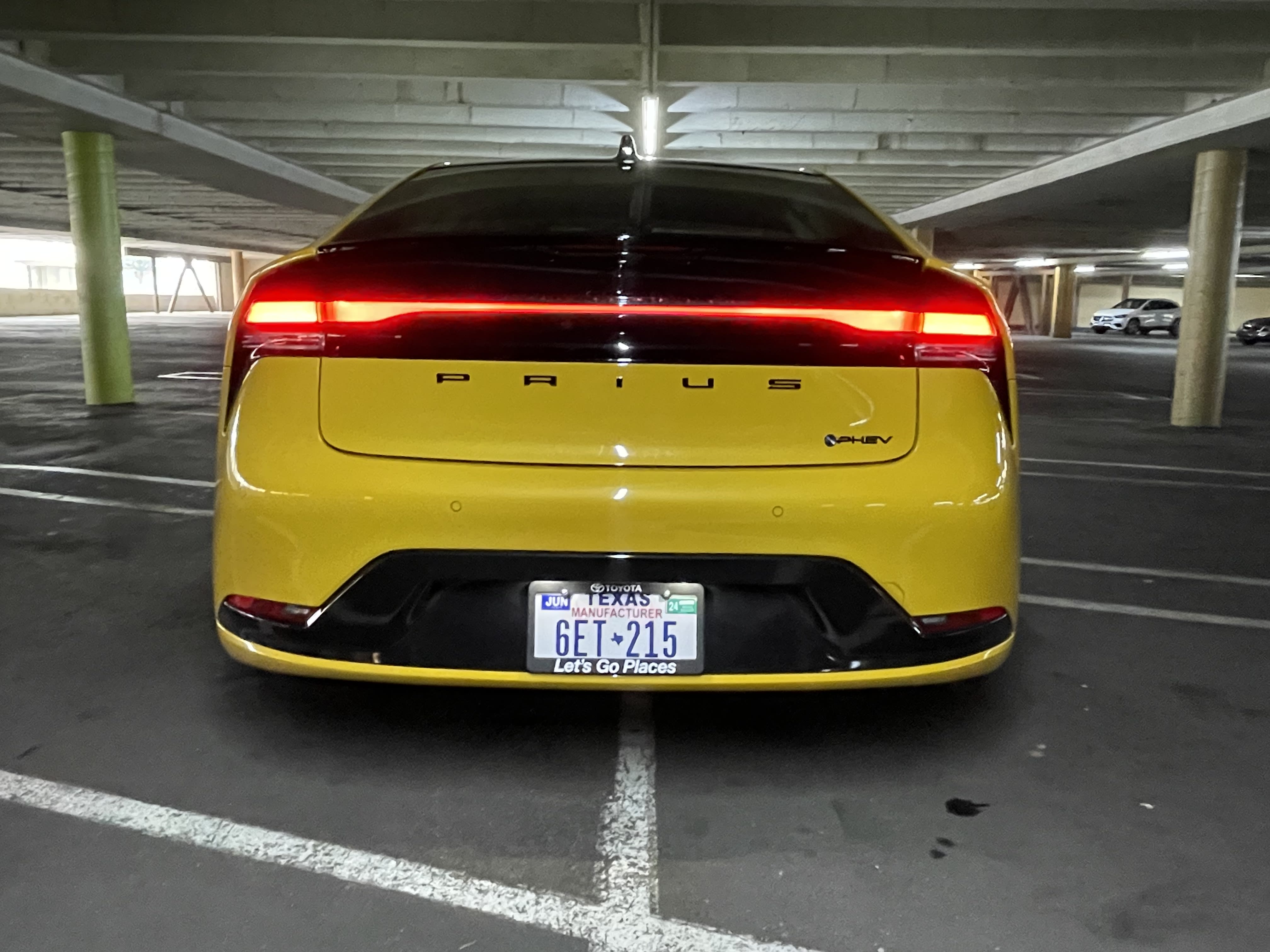
It cruised along at better than 50 mpg, a number that puts my beloved Sienna hybrid to shame. Then again, the Sienna is lugging around an extra 1600 pounds and those glorious electric sliding doors, so I will call it even.
Under the hood, the Prius’ 2.0-liter DOHC 16-valve four-cylinder engine and plug-in hybrid system deliver 220 horsepower combined.
That is nearly double the output of the early Priuses Larry David once crept around Beverly Hills in.
The EPA rates it at 114 MPGe combined and 48 mpg in hybrid-only mode, with about 45 miles of EV range.
Plug it in overnight, drive electric all day, then let it switch to hybrid mode when needed.
It is the kind of flexibility that makes sense in 2026 and will likely still make sense in 2036.
The Interior: Form Finally Meets Function
Comfort-wise, the Prius was exceptional.
The ride was smooth, the seats supportive, and the cabin quiet enough that I took a call in the Fresno parking lot, and even remixed audio tracks for an ad with the team.
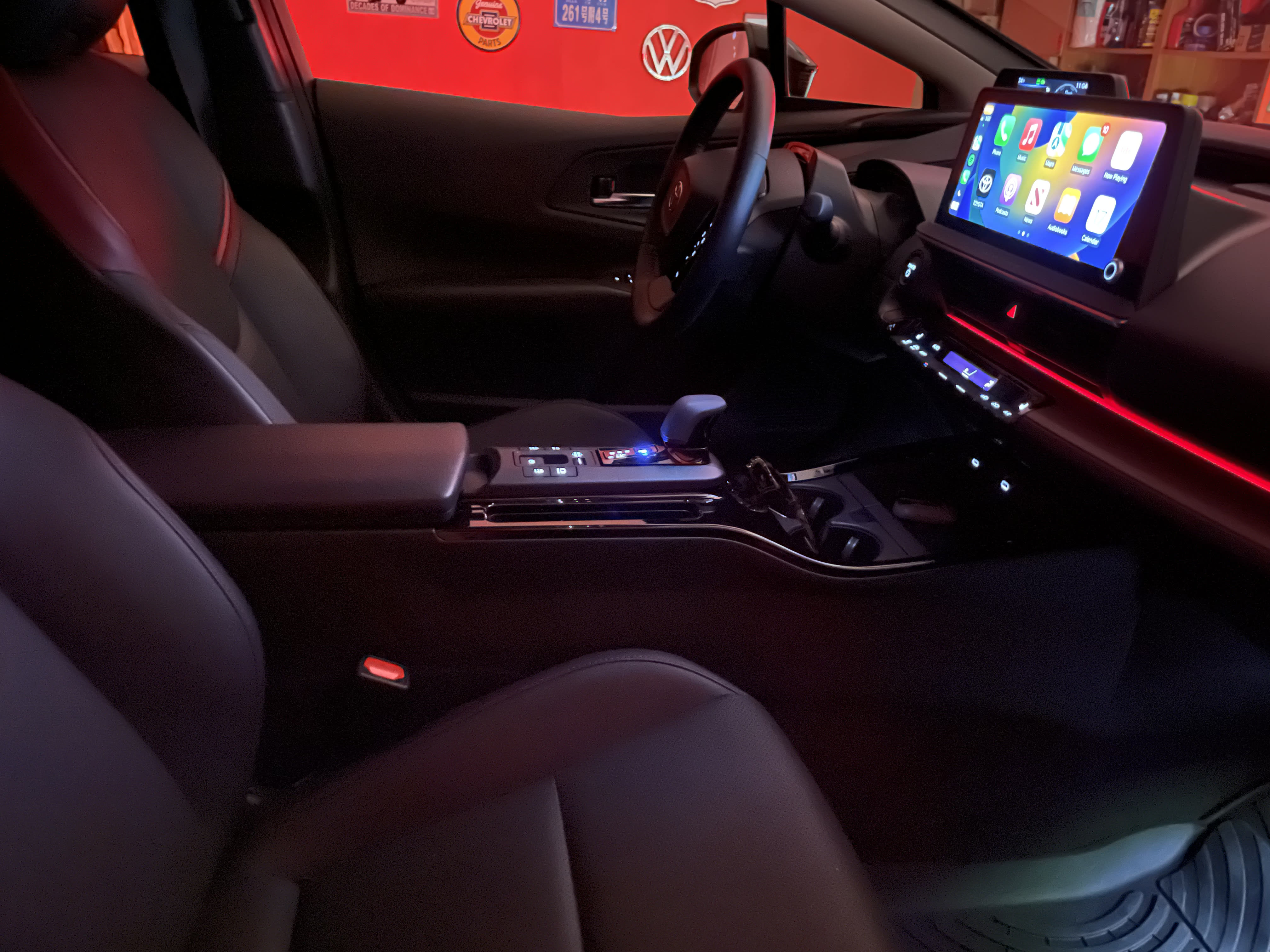
That is how calm the interior is.
Toyota’s latest cabin design feels open, intuitive, and premium. Materials and fit land on the upscale side.
The roofline is the only real surprise.
It looks great from the outside but makes it easy to bump your head until you learn the right angle.
That is something I would expect from a Supra, not a Prius.
Once inside, the seating position is where it should be, and the cabin feels more like a Lexus than anything in the economy class.
Eight hours on the road will wear down almost any car and practically any driver, whether you are gliding through open stretches or crawling through the final twenty miles of bumper-to-bumper like I did on the way home.
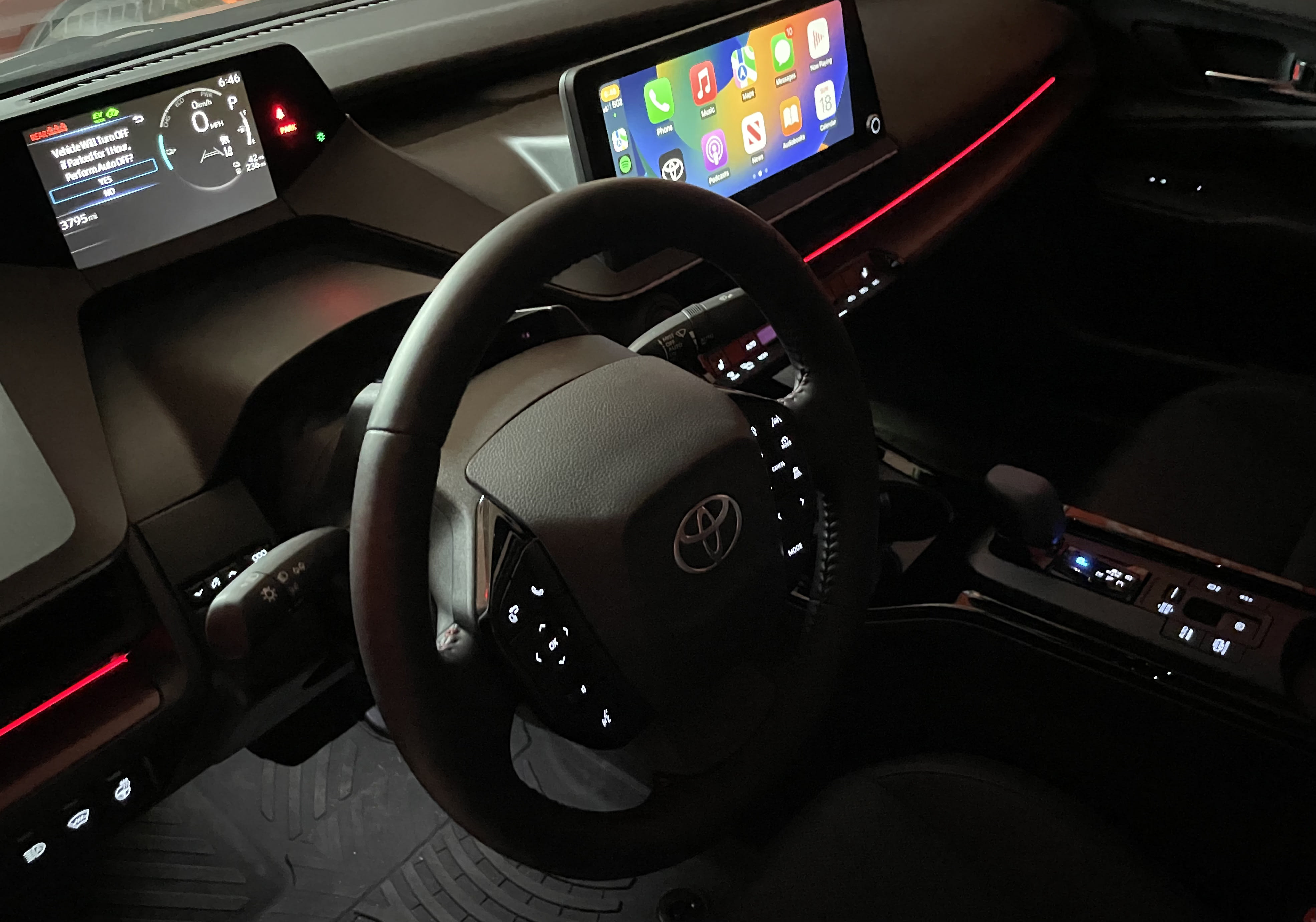
The 12.3-inch Toyota Audio Multimedia system with wireless Apple CarPlay and Android Auto was the star of the trip. I handled a string of work calls on the way up, then switched to The Smiths and a healthy dose of 80s nostalgia on the way back.
The system is crisp and quick, and the layout makes managing calls, swapping tracks, and navigating easy. It helped the whole day feel a little shorter.
Cargo Space: More Than It Looks
Cargo space is classic Prius: 20.3 cubic feet behind the second row and 36.6 with the seats folded.
A few days after my Fresno run, I gave it another test at my Carcadia show.
The Prius handled it without hesitation.
Six cones, a folding table, two Starbucks travelers, four boxes of donuts, a clothing rack, shirts, and hats all went in with room to spare.
Give me one more month and I might have squeezed in a partridge in a pear tree too.
The Bigger Picture: From Early Adopters to Everyone
I have watched Toyota’s hybrid evolution up close.
My family drives a Sienna Hybrid, a daily reminder that the technology that started in the Prius now powers much of Toyota’s lineup, from compact sedans to full-size Tundra’s.
The culture has shifted with it.
You don’t have to be green to want to save green.
After years of working in transportation electrification, the Prius stands out to me as the car that changed the direction of the industry.
It became the best-selling hybrid of all time and pushed other automakers to follow. It made electrification feel normal.
Without it, I doubt we would end up with hybrid Ford Mavericks, hybrid Porsche Cayennes, or the wave of electrified models on the road now.
The Prius made efficiency mainstream long before anyone expected it.
While others raced toward full EV lineups, Toyota stayed focused on hybrids and plug in hybrids, a move that raised eyebrows at the time.
Some called Akio Toyoda out of touch. Today, it feels more strategic than stubborn.
Gas prices remain high, charging infrastructure is still uneven, and the political winds have shifted.
Hybrids have become the steady middle ground, and BEVs are the ones facing the louder questions.
From my vantage point, Toyota read the moment better than they were given credit for.
Verdict: The Prius Gets a Glow-Up
Two decades ago, the Prius symbolized virtue. Today it signals smart money and unexpectedly good taste.
The 2026 Prius Nightshade XSE Plug-In Hybrid blends efficiency, technology, and design in a way that finally feels desirable to people who actually care about cars.
It is the car you buy because it makes sense and because you genuinely want it. It can handle a long commute, serve as a rolling office, and still turn heads at a meet.
From Hollywood prop to financial flex, the Prius did not just evolve. This newest version went in looking responsible and came out looking like a badass K-pop Demon Hunter.
If one shows up at the next car meet near you, do not be surprised if it ends up being the car people talk about on the drive home. – Glenn Oyoung
SIDEBAR STORY
The Domination of Prius in the Taxi Fleet
Almost anywhere you go in this country, there’s a flock of Priuses parked in the taxi zone. Not since the Checker Marathon has a car model so thoroughly dominated the taxi fleet market in America.
Did you know it all started because of one taxi driver in Vancouver, Canada?
Andrew Grant, a 20-year Yellow Cab taxi driver from Vancouver bought a first-generation Toyota Prius, making it the first time a hybrid vehicle was used for taxi service in North America.
Grant drove his first-generation Prius taxi for two years, logging over 200,000 miles before word got back to Toyota. The car company asked if they could take back the car for research in exchange for a new 2003 Prius.
He took the offer, but after a year, brought a new, second-generation Prius, using the 2003 as his personal car. Grant ended up logging over 930,000 miles on the second-generation Prius
Word spread fast within the taxi community about how cost-effective the Prius was, both in terms of fuel economy, cost of maintenance (brake service is a fraction of the cost of ICE cars) and overall reliability.
It reached a point where Yellow Cab companies started adopting Toyota Priuses and other hybrids in the mid-2000s, with Vancouver's Yellow Cab leading the way.
Soon, the Prius became the car of choice among taxi companies across the country. The rest is history.
So now Toyota offers the Prius in Karashi Yellow.
While the car company has never offered the Prius in mustard yellow before, it’s been a Prius staple on the streets for years now—thanks to the Yellow Cab Company and other taxi owners.
We like to think of it as Toyota’s hat tip to Andrew Grant and all the taxi drivers that helped make the Prius the benchmark for fuel economy, low maintenance cost, and high reliability. Now that’s cool! – Roy Nakano
The Toyota Prius Plug-in Hybrid One-Stop Shop
We’ll save you some time in researching the Toyota Prius Plug-in Hybrid Electric Vehicle. Here are some of the best YouTube videos to watch about this vehicle:
Prius PHEV Breaks Longest Uber Ride Record (Top Gear)
Sporty Hybrid with a Dark Edge (CNN)
The 2026 Toyota Prius Nightshade Is Actually COOL! (TFLnow)
Mechanic’s overview of the 5th gen. Toyota Prius (The Car Care Nut)
Toyota Prius Nightshade Edition is the MUST own new AWD sedan (Raiti’s Rides)
10 Reasons Why The 2026 Toyota Prius PHEV Beats Every Electric Car (Car Help Corner)
How This Base 2026 Toyota Prius PHEV Embarrasses EVs (Sam Car Legion)
Recommended Prius Forums:
PriusChat: Often considered the #1 resource, this forum has sections for every generation (Gen 1-5), mods, maintenance, and a huge marketplace. Great for in-depth troubleshooting and DIY advice.
Reddit (r/prius): Excellent for quick questions, news, and seeing what other owners are up to, with a vibrant, active community.
ToyotaOwner Forums (Prius Section): The official Toyota community, good for manufacturer-related news, recalls, and general owner experiences.
The Pertinent Specifications
Name of Car: 2026 Toyota Prius Nightshade XSE Plug-In Hybrid Electric Vehicle
Prices: $37,795 (base) + options = $41,304 as tested
Options: 12.3-in Display, Digital Key, Fixed Glass Roof, Alloy Wheel Locks, Cargo Mat
Type of vehicle: 5-door hatchback, plug-in hybrid electric
Propulsion: Plug-in hybrid electric vehicle, with 2.0-liter DOHC VVT-i four-cylinder internal combustion engine with two lithium battery-powered electric motors (220 hp combined)
Transmission: Electronically Controlled CVT
EV Range: 39-40 miles (EPA est.)
EPA estimated combined EV + gas range: 550-600 miles
Fuel Economy: 114 MPGe combined (EV + gas) / city, highway, combined: 50/47/48 MPG EPA rating (hybrid mode)
Annual Fuel Cost: $800 (EPA est.)
Drive configuration: Front-wheel drive (on-demand electronic all-wheel drive is a $1400 option)
0-60 mph performance: 6.6 seconds (manufacturer estimate)
EPA size classification: Midsize
Location of final assembly: Tsutsumu, Japan
For more information, visit Toyota.com
About The Authors

Glenn Oyoung is a marketer based in Los Angeles. Glenn’s lifelong passion for cars is rooted in playing with Hot Wheels, and has continued into 1:1 scale. He’s the former marketing director of American Racing, author of ‘vehicular alphabet books’ “C is for Car” and "P is for Petersen" in collaboration with the Petersen Automotive Museum. His passion for cars extends to his role as the founder of the monthly car meet Carcadia at Route 66, the most diverse car meet in the San Gabriel Valley.
Together with

Roy Nakano gave birth to LACar in the late '90s. As LACar's Editor, Roy shapes the content and assigns the stories. As a writer, Roy likes to stray off the beaten automotive path: "Six Degrees of Reparations" reflected on the ethical limits taken by car companies throughout history. "Traveling Through the Past and Present of the Green Book" looked at businesses that took a stand and the man that wrote the book. "Best Cars to Drive in Rush Hour Traffic" was an LACar guide published in the pre-GPS era. "In Search of the First Datsun 510 Tuner" looked at one of the milestones in the origin of import tuners. And "Us vs Them" examines the instances when rivalry among automotive enthusiasts crossed the line to violence and even death.